UB MENU

Testing weapons such as the AIM-174 missiles on the Navy F/A-18F (left) and learning to fight alongside Navy F-35s and Air Force fighters such as the F-15 (right) are concrete actions that prepare for war.
U.S. NAVY
Stop Phrasing Military Moves as ‘Deterrence’
Deterrence is not a strategic framework. Warfighting is.
By Commander Thomas Duffy, U.S. Navy (Retired)
October 2025
Proceedings
Vol. 151/10/1,472
FEATURED ARTICLE
FacebookTwitterRedditEmailShare
COMMENTS“Deterrence . . . is the art of producing in the mind of the enemy . . . the fear to attack,” Dr. Strangelove declaims in the 1964 film that bears his name. It is a classic practical explanation articulated well before the Vietnam War reached the high-water mark of American involvement. It reflects the Cold War conviction that nuclear weapons made wars useless; they had no victors and must therefore be avoided.
This belief supported all sorts of abstract thinking and led to a situation in which game theory substituted for messier and less quantifiable ways of thinking about war. In practice, of course, the North Vietnamese had no fear of attacking; they were not deterred. They simply chose to attack with whatever (conventional) means they could lay their hands on and in ways that were difficult to respond to. The limiting factor for North Vietnam was capacity, not will. The Vietnam War was not so much a failure of deterrence as it was a demonstration of deterrence’s irrelevance.
If a widespread conventional conflict would lead inevitably to a large-scale nuclear exchange, then only a madman would talk about going to war. The actual winning and losing of battles is not a matter for polite conversation. In particular, as Michael Caine puts it in Paramount’s 1964 film
Zulu, losing “looks bad in the newspapers and upsets civilians at their breakfast.” But “deterrence” allows for seemingly reasonable discussion of unreasonable events one hopes will never occur.
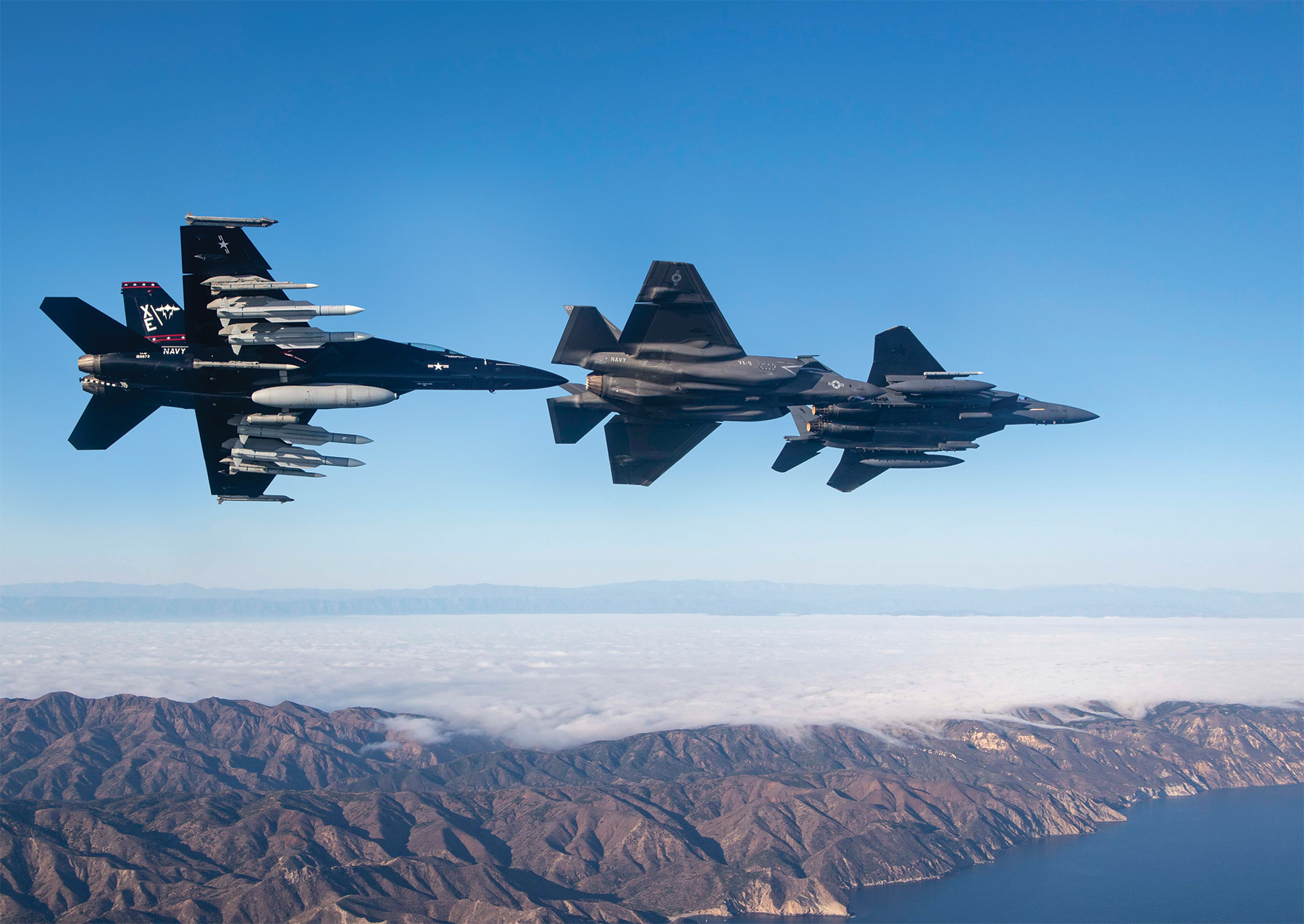
Testing weapons such as the AIM-174 missiles on the Navy F/A-18F (left) and learning to fight alongside Navy F-35s and Air Force fighters such as the F-15 (right) are concrete actions that prepare for war. U.S. Navy (Kory Hughs) That is to say, to discuss deterrence is really to talk about political forecasting—in this case, attempting to predict and influence foreign decision-makers. But consider, for example, the poor track record of domestic political forecasters regarding the outcomes of elections, even when the forecasters speak the candidates’ language and often know them personally. One might expect more humility regarding forecasts about the reactions and decisions of foreign leaders whom the forecasters do not know and whose languages they do not speak. The consequences of a failure of deterrence would be much higher than for incorrectly forecasting an election.
Political leaders can always talk about deterrence, but if it is little more than an optimistic prediction, the military cannot use it as a strategic framework. Only a maritime strategy grounded in warfighting can fully prepare the Sea Services to fight the war that will follow deterrence’s failure.
Forecasting Is Another Word for Guessing
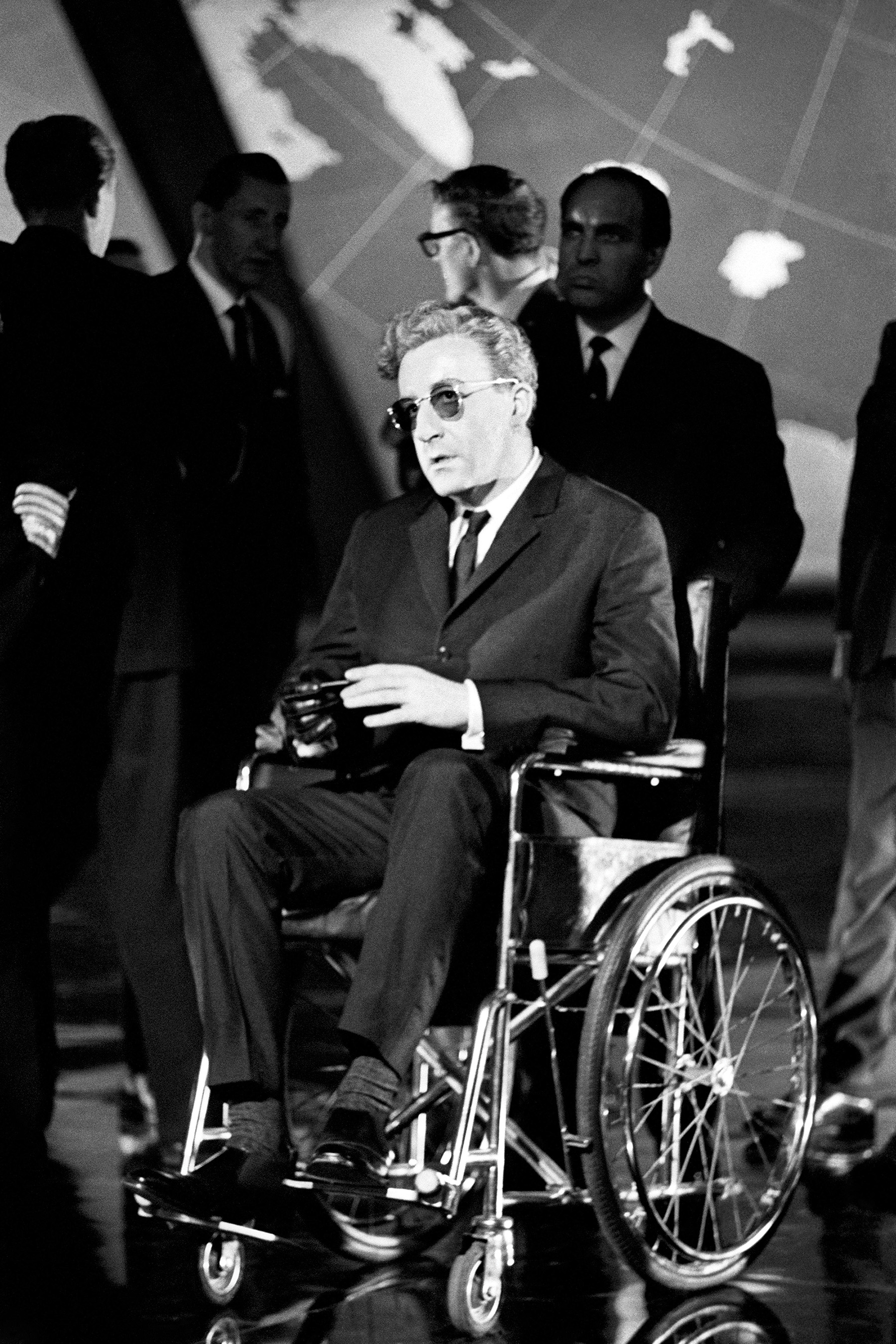
“Deterrence . . . is the art of producing in the mind of the enemy . . . the
fear to attack,” says the titular character of the 1964 film,
Dr. Strangelove. This idea helped lead to game theory substituting for less quantifiable ways of thinking about war. Alamy In the years following
Dr. Strangelove, the United States arguably predicated its Vietnam strategy on deterrence, using calibrated military actions to send political and diplomatic signals to North Vietnam. But it is not clear that U.S. decision-makers even correctly recognized which North Vietnamese leaders were in charge and, therefore, whom they were trying to deter. As Max Hastings laid out in
Vietnam: An Epic Tragedy, 1945–1975, the obscure First Secretary Le Duan “dominated Hanoi’s policy making [from 1961], as he would continue to do for the next quarter century, though the world did not know this.” Hastings compared the more widely recognized leader Ho Chi Minh with the legendary Spanish hero El-Cid, whose corpse was supposedly bound to his horse to “lead” a final charge at Valencia in 1099. Ho Chi Minh “abdicated mastery and even influence on war making, but . . . remained an indispensable figurehead, commanding respect throughout much of the world.”1
In fairness, the difficulties inherent in understanding and predicting the decision-making of foreign countries should not be minimized. Many foreign policy professionals regard the “Bush 41” foreign policy group as an A-Team—Secretary of State James Baker, Secretary of Defense Dick Cheney, and National Security Advisor Brent Scowcroft, all led by President George H. W. Bush, a former ambassador to the United Nations and director of the CIA.2 Scowcroft and Deputy Secretary of State Lawrence Eagleburger had both served in Yugoslavia—the latter for seven years, culminating as the U.S. ambassador—and both spoke Serbo-Croatian. Yet, as that country dissolved in 1991–92, even those men were at a loss about what to do.3
American political scientist Philip Tetlock has held noteworthy “Expert Political Judgment” tournaments that illustrate just how hard political forecasting can be to get right. Considering the Federation of American Scientists’ famous Doomsday Clock ticking down to midnight-—a warning of how close the United States and the Soviet Union were to a nuclear war—he realized it was set by the hunches of normally fact-bound scientists: “The clock setters were guessing.”4
Difficult and Unreliable
Intelligence officers like to joke that their ultimate goals are omniscience and immediacy. To eliminate guesswork would require perfect assessment of foreign decision-makers and their thought processes. To achieve the intelligence officers’ goals, the technical challenges of gaining access to all an opponent’s communications would have to be overcome. But that would be the easy part. Accurately measuring foreign interpretations of
your own moves and statements—remember Dr. Strange-love’s art of introducing fear into the mind of the enemy—would require extraordinary insight into what you have accessed. In a sense, making deterrence work reliably could require an understanding that goes beyond that of the foreign decision-makers themselves.
Policies predicated on deterrence should be formulated with recognition of the role of conjecture in forecasting. Indeed, it is a wonder that any leader with strategic judgment would publicly frame
anything in terms of deterrence, except by a desire to avoid difficult conversations. The word deterrence is now used so broadly as to become practically meaningless; a recent publication from a leading think tank manages to use the word five different ways in only two pages, rendering it in effect a synonym for statecraft.
Means and Ends
So, if planning explicitly for deterrence is unreliable and the word itself has been broadened out of any practical meaning, how then should defense thinkers approach the future?
An obvious first step would be to stop phrasing military moves in terms of deterrence, even if that risks “upsetting the civilians at their breakfast.” It would be a challenge—no one ever got relieved for talking about deterrence, much like the old slogan, “No one ever got fired for buying IBM.” But the safe choice isn’t always the best choice. Strategists should recognize they simply do not have the access or insight to be able to determine how or even whether their adversaries are interpreting deterrent or communicative moves. They should acknowledge they may not even know who the decision-makers to be deterred actually are.
Some influence could well derive from the employment of a credible fighting force, but that should be seen as a second-order effect, not a planning goal. Leaders should be humble enough to realize they have only the foggiest idea of what is going on inside their opponents’ heads.
While military leaders have next-to-little understanding or control over deterrence itself, they have rather a lot of influence over preparation for the actual employment of military force to accomplish political goals. In other words, they have significantly greater effect over fighting than they do over deterrence. Warriors should have the courage to acknowledge that deterrence is—at best—budget speak, a polite way to euphemize the grim realities of war. Put another way, there should be no shame in warriors talking more about war and less about deterrence.