


SAF Don’t hold your breath…
 08-12-2025 | 07:24 AM
#1

Thread Starter
Perennial Reserve
Joined: Jan 2018
Posts: 14,246
Likes: 257
 SAF Don’t hold your breath…
https://infra.economictimes.indiatim...fail/123251908
- Aviation
- 10 Min Read
Airlines’ green fuel dreams stall as SAF projects collapse
World Energy's plans for a second plant in Houston have stalled amid a lack of commitment from the industry, according to Chief Executive Gene Gebolys.
In 2019, Scott Kirby, the chief executive of United Airlines, hailed its new contract with green jet fuel producer World Energy as an example for the aviation industry to follow in its drive to cut emissions.
Six years later, that collaboration is dead.
Boston-based World Energy was one of the first companies in the world to produce commercial quantities of sustainable aviation fuel (SAF), a type of renewable fuel made from sources such as used cooking oil, agricultural residues and other waste.
Its Paramount refinery near downtown Los Angeles had been a rare success story, supplying millions of gallons of SAF a year to airlines such as United Airlines and fellow US carrier JetBlue Airways. The plant, which began operations in 2016, was central to the carriers' pledges to help the airline industry switch to a blend of 10 per cent SAF by the end of this decade.
But the refinery quietly ceased operations in April. And World Energy's plans for a second plant in Houston have stalled amid a lack of commitment from the industry, according to Chief Executive Gene Gebolys.
"Some airlines were engaged in a pretty disingenuous effort to put out press releases" overstating their commitment to SAF projects, Gebolys said, without naming any companies. "People sometimes said too much in the past and did too little."
Six years later, that collaboration is dead.
Boston-based World Energy was one of the first companies in the world to produce commercial quantities of sustainable aviation fuel (SAF), a type of renewable fuel made from sources such as used cooking oil, agricultural residues and other waste.
Its Paramount refinery near downtown Los Angeles had been a rare success story, supplying millions of gallons of SAF a year to airlines such as United Airlines and fellow US carrier JetBlue Airways. The plant, which began operations in 2016, was central to the carriers' pledges to help the airline industry switch to a blend of 10 per cent SAF by the end of this decade.
But the refinery quietly ceased operations in April. And World Energy's plans for a second plant in Houston have stalled amid a lack of commitment from the industry, according to Chief Executive Gene Gebolys.
"Some airlines were engaged in a pretty disingenuous effort to put out press releases" overstating their commitment to SAF projects, Gebolys said, without naming any companies. "People sometimes said too much in the past and did too little."
While airlines have announced 165 SAF projects over the past 12 years, only 36 have materialised, Reuters found. Among those, Reuters uncovered problems at three of the largest - including World Energy - that exemplify the systemic challenges plaguing the SAF sector.
Of the remaining projects, 23 have been abandoned, 27 are delayed or on indefinite hold, 31 have yet to produce any fuel, and 4 are SAF credit deals, where no physical fuel is delivered.
For the other 44 projects, Reuters was unable to find any public updates since their initial announcements.
If all the pending projects announced by airlines reached their maximum potential, it would only add 12 billion gallons of SAF production, the Reuters analysis found.
Of the remaining projects, 23 have been abandoned, 27 are delayed or on indefinite hold, 31 have yet to produce any fuel, and 4 are SAF credit deals, where no physical fuel is delivered.
For the other 44 projects, Reuters was unable to find any public updates since their initial announcements.
If all the pending projects announced by airlines reached their maximum potential, it would only add 12 billion gallons of SAF production, the Reuters analysis found.
08-12-2025 | 03:32 PM
#3

Prime Minister/Moderator

Joined: Jan 2006
Posts: 45,120
Likes: 796
From: Engines Turn or People Swim
Political winds have changed. I think the Airlines started down that road in hopes that they sanity would previal and they wouldn't have to travel too far down said road.
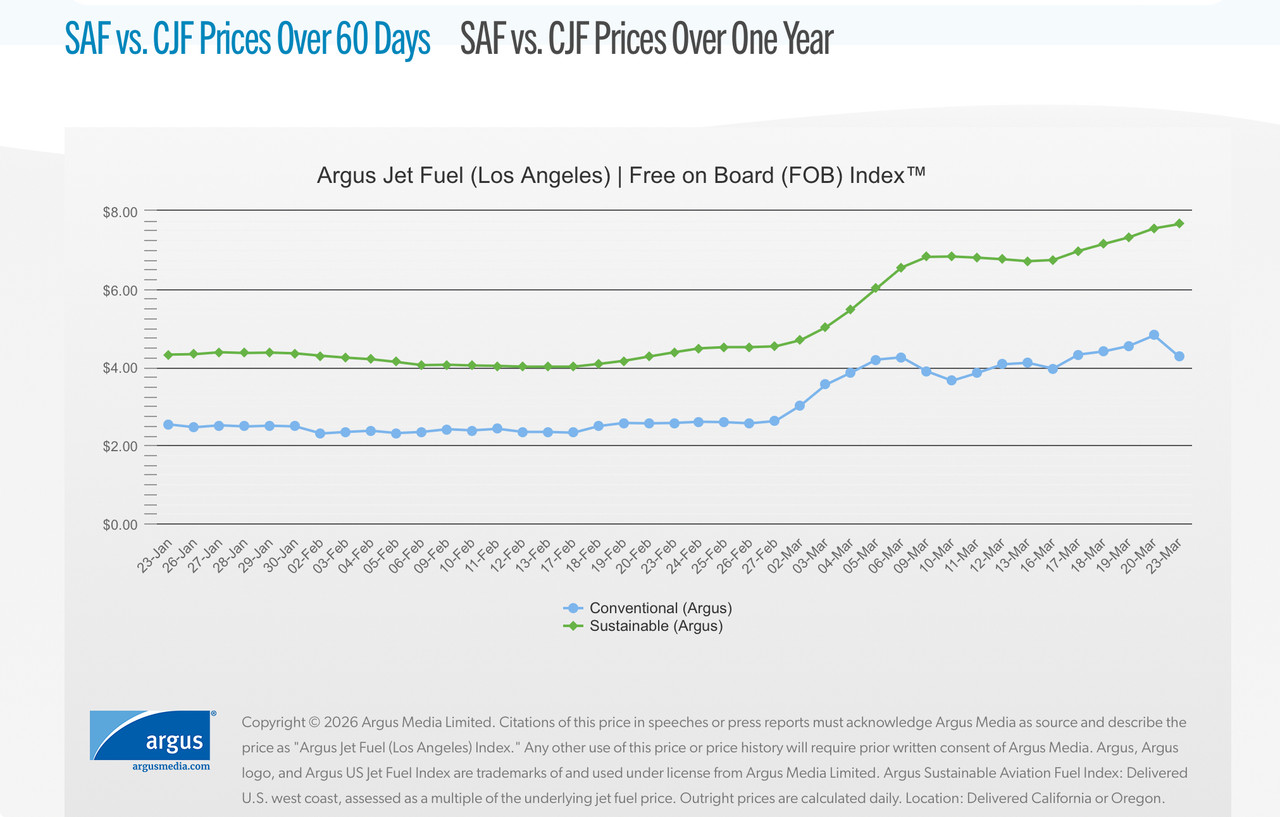
But SAF actually works, just costs more than dino jet juice. That cost would come down if it was scaled up to industry-relevant production volumes, but would still be more than petro-based fuel.
But SAF actually works, just costs more than dino jet juice. That cost would come down if it was scaled up to industry-relevant production volumes, but would still be more than petro-based fuel.
08-12-2025 | 03:51 PM
#5
Gets Weekends Off
Joined: Dec 2011
Posts: 2,045
Likes: 257
From: A320 FO
Political winds have changed. I think the Airlines started down that road in hopes that they sanity would previal and they would have to travel too far down said road.
But SAF actually works, just costs more than dino jet juice. That cost would come down if it was scaled up to industry-relevant production volumes, but would still be more than petro-based fuel.
But SAF actually works, just costs more than dino jet juice. That cost would come down if it was scaled up to industry-relevant production volumes, but would still be more than petro-based fuel.
In the meantime hopefully we just stick with what is cheapest.
08-13-2025 | 11:25 AM
#6
Thread Starter
Perennial Reserve
Joined: Jan 2018
Posts: 14,246
Likes: 257
Actually, that seems more like a mere Solyndra-like trolling for Feddy bucks than it does any sort of realistic proposals.
08-13-2025 | 02:19 PM
#7
Gets Weekends Off
Joined: Dec 2011
Posts: 2,045
Likes: 257
From: A320 FO
I certainly agree with you that if the research money is being doled out by human beings instead of a non-existent, hypothetical and probably impossible AI system then political considerations and all forms of corruption are leading to a significant portion of the funds being allocated inefficiently at best and likely leading to boondoggles.
12-29-2025 | 07:36 PM
#8
Thread Starter
Perennial Reserve
Joined: Jan 2018
Posts: 14,246
Likes: 257
https://www.flyingmag.com/saf-neste-...ero-emissions/
An excerpt..
An excerpt..
Finland’s Neste—which claims to be the world’s largest producer of sustainable aviation fuel (SAF)—is walking back its pledge to achieve carbon-neutral production by 2035.
Neste made the commitment in 2020 when it signed The Climate Pledge—a coalition of 625 signatories that aims to achieve carbon neutrality by 2040, a decade ahead of the target set by the United Nations’ Paris Agreement. In December, though, the company said its “very ambitious” target “would have required significant investments that are currently not realistic.”
Neste replaced its 2035 carbon-neutral pledge with the goal of reducing greenhouse gas (GHG) emissions from its operations by 80 percent by 2040. It also extended its target to reduce operational emissions by 50 percent, from 2030 to 2035. Per CEO Heikki Malinen, the company has slashed its own GHG emissions by 24 percent since 2019.
Neste earlier in 2025 reported delays in the transformation of its Porvoo, Finland, refinery into a SAF production hub, which it cited as a factor in the revised targets.
Neste made the commitment in 2020 when it signed The Climate Pledge—a coalition of 625 signatories that aims to achieve carbon neutrality by 2040, a decade ahead of the target set by the United Nations’ Paris Agreement. In December, though, the company said its “very ambitious” target “would have required significant investments that are currently not realistic.”
Neste replaced its 2035 carbon-neutral pledge with the goal of reducing greenhouse gas (GHG) emissions from its operations by 80 percent by 2040. It also extended its target to reduce operational emissions by 50 percent, from 2030 to 2035. Per CEO Heikki Malinen, the company has slashed its own GHG emissions by 24 percent since 2019.
Neste earlier in 2025 reported delays in the transformation of its Porvoo, Finland, refinery into a SAF production hub, which it cited as a factor in the revised targets.

Thread
Thread Starter
Forum
Replies
Last Post


