


Class action suit
 03-11-2026 | 09:13 AM
#1

Thread Starter
Perennial Reserve
Joined: Jan 2018
Posts: 14,248
Likes: 257
 Class action suit
United Airlines faces mass lawsuit over vaccine accommodation policy
A federal court clears the way for a class action – what HR teams need to knowhttps://www.hcamag.com/us/specializa...-policy/568027
United's original plan was to place every exempted worker on unpaid leave – indefinitely – until the pandemic sufficiently wound down. For non-customer-facing employees, such as mechanics and ramp agents, the airline eventually changed course, allowing them to keep working under a masking and testing requirement. But for customer-facing employees – pilots, flight attendants, and others in roles that brought them into regular contact with the public – the policy held firm. More than 2,200 employees in total were placed on unpaid leave starting in November 2021. They were given the opportunity to apply for alternative non-customer-facing positions within the company, but they could not remain in their existing roles.
Those employees argued that United never seriously considered whether a less drastic option might have worked. Why, they asked, were non-customer-facing workers permitted to mask and test their way through the pandemic while customer-facing employees were sent home without pay?
The appeals court did not answer that question – that is for a jury to decide. But it did say the question is worth asking on behalf of the religious accommodation seekers within that group, all at once, rather than one employee at a time. The court certified a class made up of customer-facing employees who received religious exemptions and were placed on unpaid leave. Employees who had sought medical accommodations were not included, as the court found their claims required a more individualized review.
That distinction matters enormously. When a workplace policy affects a large group of employees in the same way, a class action allows them to pool their claims into a single lawsuit rather than file separately. For United, that means one trial could potentially determine its liability to the entire group at once. The exposure – covering lost wages, additional damages, and possibly punitive damages – is significant.
The court was also pointed in its reading of what the law actually requires of employers. Under Title VII of the Civil Rights Act, a company that receives a religious accommodation request cannot simply offer its preferred solution and move on. It must actively work through all available alternatives. Only after doing so, and concluding that each option would impose a substantial burden on the overall business, can it turn a request down. In this case, United had already demonstrated that masking and testing was workable for one segment of its workforce. That made it considerably harder to argue the same approach would have been unworkable for another.
For HR professionals, that is perhaps the single most important takeaway from this ruling. A company's own accommodation decisions in one part of the business can be used against it in another. If a policy works for some employees, the bar for claiming it would have failed for others is high.
Those employees argued that United never seriously considered whether a less drastic option might have worked. Why, they asked, were non-customer-facing workers permitted to mask and test their way through the pandemic while customer-facing employees were sent home without pay?
The appeals court did not answer that question – that is for a jury to decide. But it did say the question is worth asking on behalf of the religious accommodation seekers within that group, all at once, rather than one employee at a time. The court certified a class made up of customer-facing employees who received religious exemptions and were placed on unpaid leave. Employees who had sought medical accommodations were not included, as the court found their claims required a more individualized review.
That distinction matters enormously. When a workplace policy affects a large group of employees in the same way, a class action allows them to pool their claims into a single lawsuit rather than file separately. For United, that means one trial could potentially determine its liability to the entire group at once. The exposure – covering lost wages, additional damages, and possibly punitive damages – is significant.
The court was also pointed in its reading of what the law actually requires of employers. Under Title VII of the Civil Rights Act, a company that receives a religious accommodation request cannot simply offer its preferred solution and move on. It must actively work through all available alternatives. Only after doing so, and concluding that each option would impose a substantial burden on the overall business, can it turn a request down. In this case, United had already demonstrated that masking and testing was workable for one segment of its workforce. That made it considerably harder to argue the same approach would have been unworkable for another.
For HR professionals, that is perhaps the single most important takeaway from this ruling. A company's own accommodation decisions in one part of the business can be used against it in another. If a policy works for some employees, the bar for claiming it would have failed for others is high.
03-11-2026 | 01:09 PM
#2
On Reserve
Joined: Mar 2012
Posts: 29
Likes: 1
Sambrano v. United Airlines
Like I keep telling you, this isn’t over by a long shot. Yesterday, the Fifth Circuit Court of Appeals ruled in Sambrano v. United Airlines, affirming class certification for United Airlines pilots and flight attendants who refused the jab on religious grounds and got “accommodated” right out of a paycheck. Corporate media has completelyignored this terrific story. You’re hearing it here first.
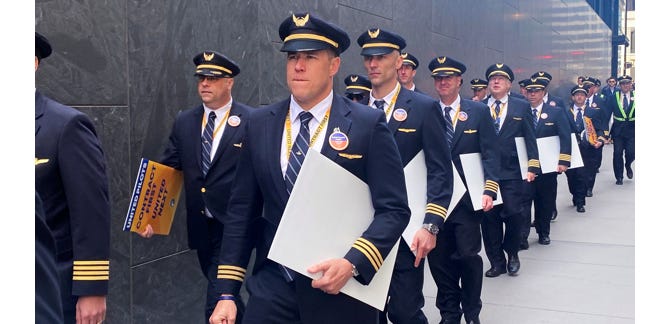
You may recall that, back during the pandemic panic, United Airlines was the most aggressiveairline in the country on vaccine mandates. Get the shot or get out. No ifs, ands, or spiritual buts. In all, 5,885 employees requested religious or medical accommodations, and —in a very cowardly fashion— 4,070 were technically “granted” and the employees were “accommodated.”
It was just rhetorical sleight of hand. Guess what “accommodated” meant?
Yep. You know. The Fifth Circuit’s opinion explained that United planned to place all exempted employees “on unpaid leave beginning on October 2, 2021, and ending whenever the ‘pandemic meaningfully receded.’” In other words: Sure, you can practice your faith. You just can’t practice your profession. Or eat. Eventually, United let non-customer-facing employees come back with masks and testing. But pilots and flight attendants stayed parked on the tarmac — 2,221 employees stranded on indefinite, unpaid leave.
According to United, “indefinite, unpaid leave” is nothing like being fired. True, you have no job, and no prospects of a job in the near future. And you got no paycheck or benefits. But you still had to follow company policy, like not defaming the company. Obviously, as everyone knows who was there, “unpaid leave” was a sham and a fraud, designed to force the employees to quit so United didn’t have to fire them.
The courageous pilots sued, alleging United “forced them to choose between taking the vaccine in violation of their faiths or at the expense of their health and their livelihoods.” The district court certified the class. United appealed. And yesterday, a three-judge panel — Judges Higginson, Willett, and Engelhardt — essentially said, Nice try, United. In legal language: “We AFFIRM.”
As one X commenter who identified herself as a United employee put it: “We are the largest class ever certified against a private employer for religious discrimination. Almost 2,000 were put on indefinite, unpaid leave or terminated.”
Now they all get discovery. Depositions. Damages. All the things corporate lawyers scare their clients about. And plaintiffs have been winning these cases all over the country. This is just the biggest one yet. It’ll be the most expensive.
Four years ago, United’s CEO bragged about having the toughest mandate in the airline industry and “leading the way.” Now his airline is leading the way into the largest religious discrimination class action ever certified against a private employer — in the jab-hostile Fifth Circuit, no less. It’s accountability. It’s consequences for treating employees’ religious beliefs and personal medical freedom like minor turbulence.
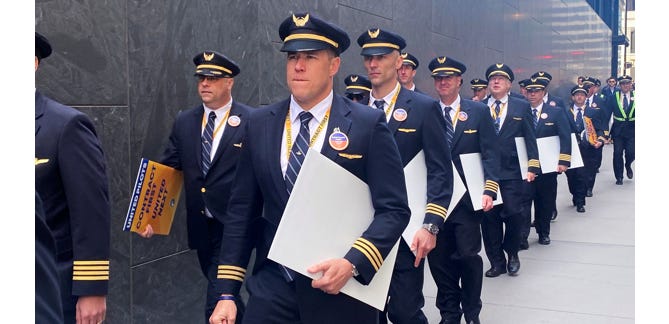
You may recall that, back during the pandemic panic, United Airlines was the most aggressiveairline in the country on vaccine mandates. Get the shot or get out. No ifs, ands, or spiritual buts. In all, 5,885 employees requested religious or medical accommodations, and —in a very cowardly fashion— 4,070 were technically “granted” and the employees were “accommodated.”
It was just rhetorical sleight of hand. Guess what “accommodated” meant?
Yep. You know. The Fifth Circuit’s opinion explained that United planned to place all exempted employees “on unpaid leave beginning on October 2, 2021, and ending whenever the ‘pandemic meaningfully receded.’” In other words: Sure, you can practice your faith. You just can’t practice your profession. Or eat. Eventually, United let non-customer-facing employees come back with masks and testing. But pilots and flight attendants stayed parked on the tarmac — 2,221 employees stranded on indefinite, unpaid leave.
According to United, “indefinite, unpaid leave” is nothing like being fired. True, you have no job, and no prospects of a job in the near future. And you got no paycheck or benefits. But you still had to follow company policy, like not defaming the company. Obviously, as everyone knows who was there, “unpaid leave” was a sham and a fraud, designed to force the employees to quit so United didn’t have to fire them.
The courageous pilots sued, alleging United “forced them to choose between taking the vaccine in violation of their faiths or at the expense of their health and their livelihoods.” The district court certified the class. United appealed. And yesterday, a three-judge panel — Judges Higginson, Willett, and Engelhardt — essentially said, Nice try, United. In legal language: “We AFFIRM.”
As one X commenter who identified herself as a United employee put it: “We are the largest class ever certified against a private employer for religious discrimination. Almost 2,000 were put on indefinite, unpaid leave or terminated.”
Now they all get discovery. Depositions. Damages. All the things corporate lawyers scare their clients about. And plaintiffs have been winning these cases all over the country. This is just the biggest one yet. It’ll be the most expensive.
Four years ago, United’s CEO bragged about having the toughest mandate in the airline industry and “leading the way.” Now his airline is leading the way into the largest religious discrimination class action ever certified against a private employer — in the jab-hostile Fifth Circuit, no less. It’s accountability. It’s consequences for treating employees’ religious beliefs and personal medical freedom like minor turbulence.
03-12-2026 | 09:05 AM
#3
Line Holder
Joined: Apr 2024
Posts: 625
Likes: 144
United Airlines faces mass lawsuit over vaccine accommodation policy
A federal court clears the way for a class action – what HR teams need to knowhttps://www.hcamag.com/us/specializa...-policy/568027
The ripples from COVID will be decades in longevity.
I for one will not forgive nor forget any of that BS

Thread
Thread Starter
Forum
Replies
Last Post


