


Preflight ORM
 03-19-2009 | 04:27 PM
#1

Thread Starter
Bracing for Fallacies
Joined: Jul 2007
Posts: 3,543
Likes: 0
From: In favor of good things, not in favor of bad things
 Preflight ORM
Hello all,
On a previous thread I saw some discussion about ORM sheets that are filled out before you fly. Just curious if anyone can elaborate on how these work?
The reason I ask is from my tour of a corporate operator who does this as well as some articles in flying magazines and publications. Now I am thinking about integrating this at our flight school.
Best,
On a previous thread I saw some discussion about ORM sheets that are filled out before you fly. Just curious if anyone can elaborate on how these work?
The reason I ask is from my tour of a corporate operator who does this as well as some articles in flying magazines and publications. Now I am thinking about integrating this at our flight school.
Best,
03-19-2009 | 04:43 PM
#2

Prime Minister/Moderator

Joined: Jan 2006
Posts: 44,913
Likes: 695
From: Engines Turn or People Swim
I have seen, but not used these forms.
Basically it is a list of risk factors, with weighted values assigned. You check off the factors which apply to the flight you are preparing for and then total up the numbers. A low risk means good-to-go, a high risk means abort. A medium risk means you either abort or take some extra risk-mitigation steps...ie additional weather brief, extra fuel, alternate, establish some in-flight abort parameters, etc.
It would be easy to make such a checklist, just base it on your missions, terrain, airspace, climate, and the limitations of your airplanes and pilots.
Here are some examples which come to mind
Risk Factor/value
Night/1
Wx < 5SM or 5000' / 2
IMC / 3
Forecast icing / No Go
Crosswind > 5kts/1
Crosswind > 10kts/2
Non-IR Current Private Pilot Solo/1
Student Pilot Solo/2
Student Pilot Solo XC/3
Solo to unfamiliar airspace/2
High Density Alt/2
Aircraft at Max Gross/2
Mountainous Terrain/3
Flight Over Water/1
Class C Airspace/1
Class B Airspace/2
A score of 3-5 might warrant careful mission review and briefing, above 5 is getting scary.
Basically it is a list of risk factors, with weighted values assigned. You check off the factors which apply to the flight you are preparing for and then total up the numbers. A low risk means good-to-go, a high risk means abort. A medium risk means you either abort or take some extra risk-mitigation steps...ie additional weather brief, extra fuel, alternate, establish some in-flight abort parameters, etc.
It would be easy to make such a checklist, just base it on your missions, terrain, airspace, climate, and the limitations of your airplanes and pilots.
Here are some examples which come to mind
Risk Factor/value
Night/1
Wx < 5SM or 5000' / 2
IMC / 3
Forecast icing / No Go
Crosswind > 5kts/1
Crosswind > 10kts/2
Non-IR Current Private Pilot Solo/1
Student Pilot Solo/2
Student Pilot Solo XC/3
Solo to unfamiliar airspace/2
High Density Alt/2
Aircraft at Max Gross/2
Mountainous Terrain/3
Flight Over Water/1
Class C Airspace/1
Class B Airspace/2
A score of 3-5 might warrant careful mission review and briefing, above 5 is getting scary.
 03-19-2009 | 05:01 PM
#4

Gets Weekends Off
Joined: Mar 2008
Posts: 13,843
Likes: 1
From: FAA 'Flight Check'
I have seen, but not used these forms.
Basically it is a list of risk factors, with weighted values assigned. You check off the factors which apply to the flight you are preparing for and then total up the numbers. A low risk means good-to-go, a high risk means abort. A medium risk means you either abort or take some extra risk-mitigation steps...ie additional weather brief, extra fuel, alternate, establish some in-flight abort parameters, etc.
It would be easy to make such a checklist, just base it on your missions, terrain, airspace, climate, and the limitations of your airplanes and pilots.
Here are some examples which come to mind
Risk Factor/value
Night/1
Wx < 5SM or 5000' / 2
IMC / 3
Forecast icing / No Go
Crosswind > 5kts/1
Crosswind > 10kts/2
Non-IR Current Private Pilot Solo/1
Student Pilot Solo/2
Student Pilot Solo XC/3
Solo to unfamiliar airspace/2
High Density Alt/2
Aircraft at Max Gross/2
Mountainous Terrain/3
Flight Over Water/1
Class C Airspace/1
Class B Airspace/2
A score of 3-5 might warrant careful mission review and briefing, above 5 is getting scary.
Basically it is a list of risk factors, with weighted values assigned. You check off the factors which apply to the flight you are preparing for and then total up the numbers. A low risk means good-to-go, a high risk means abort. A medium risk means you either abort or take some extra risk-mitigation steps...ie additional weather brief, extra fuel, alternate, establish some in-flight abort parameters, etc.
It would be easy to make such a checklist, just base it on your missions, terrain, airspace, climate, and the limitations of your airplanes and pilots.
Here are some examples which come to mind
Risk Factor/value
Night/1
Wx < 5SM or 5000' / 2
IMC / 3
Forecast icing / No Go
Crosswind > 5kts/1
Crosswind > 10kts/2
Non-IR Current Private Pilot Solo/1
Student Pilot Solo/2
Student Pilot Solo XC/3
Solo to unfamiliar airspace/2
High Density Alt/2
Aircraft at Max Gross/2
Mountainous Terrain/3
Flight Over Water/1
Class C Airspace/1
Class B Airspace/2
A score of 3-5 might warrant careful mission review and briefing, above 5 is getting scary.
USMCFLYR
03-19-2009 | 06:49 PM
#5
Thread Starter
Bracing for Fallacies
Joined: Jul 2007
Posts: 3,543
Likes: 0
From: In favor of good things, not in favor of bad things
USMCFLYR could you elaborate a little more on your current ORM briefing style? The type I was shown was that points based system.
Thank you all,
Thank you all,
03-20-2009 | 04:45 AM
#6
Gets Weekends Off
Joined: Jun 2007
Posts: 4,196
Likes: 51
From: Legacy FO
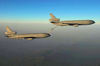
In the Air Mobility Command (AMC), there is a ORM sheet that each Aircraft Commander (AC) must fill out. Essentially, it tries to get the AC to focus on literally every hazard that can pop up. They have various points associated with different risks dealing with man, machine, and the flying environment. If the number of points gets to high, senior leadership must be involved. In those cases, the commanders will do whats in their power to reduce the identified risks (for example: swap out a crew member, delay a mission, or even cancel it if the risks are too great compared to the benifit).
Although these ORM sheets were meant to be a good thing, they are now extremely burdensome and time consuming. No matter what type of mission you fly, you are always find yourself in the moderate (low mod high severe) category which requires Squadron Commander involvement. Essentially what this has done has desensitized everyone to the everyday risks associated with flying an aircraft.
Before AMC came along with one gigantic ORM form, the KC-10 community had their own catered ORM form. It was relevant and highlighted our specific risk factors. Unfornutately, when they created an all in one form, they messed it all up. For example, flying Air Refueling may be a high risk factor for a C-5 pilot (just using C-5 guys for an example, dont hate!), but to a KC-10 pilot who does it literally on almost every mision, it isn't so much of a big deal. However, a KC-10 having to do a tactical approach into Bagram would be something to really highlight and discuss.
During the briefing, the AC is supposed to identify the risks and see if they as a crew can lower that risk. Sometimes just discussing the particulars is all thats needed.
Here is sample of a brief I would give to my crew before going out on a trip where we would be flying formation, conducting Air Refueling, and a lot of long days.
Has everyone had a chance at filing in our own personal ORM score (quality of sleep, quantity of sleep, nutrition, emotional problems etc)? Ok, great. Right now, our ORM score puts us in the high category. We're in the high category based on three identified risk factors, our early morning show time (3am), our heavy weight takeoffs (>500,000lbs), and our large cell KC-10 formation. For our early morning showtime, we'll put the best rested folks in the seats for takeoff and let the folks who have issues to bunk for the first couple hours of flight. Then we'll put those individuals in the seats for the remainder of the flight. For the heavy weight takeoff, we'll make sure to double check the takeoff and landing data and we'll try to use the longest runway available. If we lose a motor for takeoff, we'll apply the dash-1 procedures and we'll comply with the SID or SDP as necessary. For the formation, I need the Boom Operator and Flight Engineer to back the pilots up as much as they can. Notify us if we miss a radio call from ATC or lead, and keep your eyes outside looking for our cell mates. Finally, if anyone sees any additional risks that need to be addressed, please bring them to the attention of the crew and myself. We will try to eliminate the risk and/or get the leadership involved if it is something beyond our control.
Long winded ... but I think you get the point.
Although these ORM sheets were meant to be a good thing, they are now extremely burdensome and time consuming. No matter what type of mission you fly, you are always find yourself in the moderate (low mod high severe) category which requires Squadron Commander involvement. Essentially what this has done has desensitized everyone to the everyday risks associated with flying an aircraft.
Before AMC came along with one gigantic ORM form, the KC-10 community had their own catered ORM form. It was relevant and highlighted our specific risk factors. Unfornutately, when they created an all in one form, they messed it all up. For example, flying Air Refueling may be a high risk factor for a C-5 pilot (just using C-5 guys for an example, dont hate!), but to a KC-10 pilot who does it literally on almost every mision, it isn't so much of a big deal. However, a KC-10 having to do a tactical approach into Bagram would be something to really highlight and discuss.
During the briefing, the AC is supposed to identify the risks and see if they as a crew can lower that risk. Sometimes just discussing the particulars is all thats needed.
Here is sample of a brief I would give to my crew before going out on a trip where we would be flying formation, conducting Air Refueling, and a lot of long days.
Has everyone had a chance at filing in our own personal ORM score (quality of sleep, quantity of sleep, nutrition, emotional problems etc)? Ok, great. Right now, our ORM score puts us in the high category. We're in the high category based on three identified risk factors, our early morning show time (3am), our heavy weight takeoffs (>500,000lbs), and our large cell KC-10 formation. For our early morning showtime, we'll put the best rested folks in the seats for takeoff and let the folks who have issues to bunk for the first couple hours of flight. Then we'll put those individuals in the seats for the remainder of the flight. For the heavy weight takeoff, we'll make sure to double check the takeoff and landing data and we'll try to use the longest runway available. If we lose a motor for takeoff, we'll apply the dash-1 procedures and we'll comply with the SID or SDP as necessary. For the formation, I need the Boom Operator and Flight Engineer to back the pilots up as much as they can. Notify us if we miss a radio call from ATC or lead, and keep your eyes outside looking for our cell mates. Finally, if anyone sees any additional risks that need to be addressed, please bring them to the attention of the crew and myself. We will try to eliminate the risk and/or get the leadership involved if it is something beyond our control.
Long winded ... but I think you get the point.
03-20-2009 | 06:00 AM
#7
Gets Weekends Off
Joined: Feb 2007
Posts: 281
Likes: 0
From: A-300 F/O
Amen brother, and it starts in the training command. We have a point total briefing guide and 90% of the time I hear our score is xx due to birds and Index of Thermal Stress Caution so we are good to go. I hear nothing about maintaining extra vigiliance and maximizing eyes outside or that they are well hydrated to mitigate risk of heat stress and/or G-LOC
03-20-2009 | 08:33 AM
#8
Prime Minister/Moderator
Joined: Jan 2006
Posts: 44,913
Likes: 695
From: Engines Turn or People Swim
This how we started with ORM in the mid 90s. My community has changed over time and we no longer work on a points valued based system anymore. It is a briefing bullet to discuss basically what is different in this particular flight. Many/most of the risk factors are already covered and controlled in our scheduling/mission planning process. When I went through ORM Instructors school - the "father of ORM" (first developed for the Army helos) was actually disappointed in the direction that ORM had taken in the military with the points system.
USMCFLYR
USMCFLYR

I think a points system has potential value in GA flight training...it is more acceptable to abort in that environment, and there are frequently times when you really should abort....light piston airplanes can be heavily outmatched by a variety of environmental factors.
03-20-2009 | 09:31 AM
#9
Gets Weekends Off
Joined: Jun 2007
Posts: 4,196
Likes: 51
From: Legacy FO
I know you guys could probably care less, but, let me tell you about fighter drags which can literally be an ORM nightmare. For example my largest fighter drag included 2 KC-10s at McGuire, 2 KC-10s at Beaufort, 18 F-18s at Beaufort, 2 KC-135s in Mildenhall, England, and one minor detail like a tropical storm off the coast of ACK!!!
TACC will have the tanker clowns and the "mission commander" fill in TACC's own ORM sheet for fighter drags which is different than the AMC ORM form. Then, all parties involved will conference call at 3+00 prior to takeoff and discuss their ORM scores.
The irritating part is they also figure up a ORM score for you. If you and they score the same, great. But if its different, they stop the show and ask why? If you score a little too conservative, they will reduce or "downplay" your concerns. Good times. Having too high of a score gets the TACC Senior or some other Col/BGen type involved (that's a no-no if they can avoid it).
Another great thing is, this brief is to happen at 3+00 prior to takeoff. You show at 3+15. Literally, it is humanly impossible to review the flight plans, the ALTRV approvals, the NOTAMs, the weather, and then score the ORM sheets within 15 minutes. And if you aren't on time for the conference call, some of the folks up at TACC get really upset.
I just keep saying to myself, this is supposed to improve safety. And I'm sure it has. But I also think it creates another level of beauraucy for the pilots who already have enough on their plate.
TACC will have the tanker clowns and the "mission commander" fill in TACC's own ORM sheet for fighter drags which is different than the AMC ORM form. Then, all parties involved will conference call at 3+00 prior to takeoff and discuss their ORM scores.
The irritating part is they also figure up a ORM score for you. If you and they score the same, great. But if its different, they stop the show and ask why? If you score a little too conservative, they will reduce or "downplay" your concerns. Good times. Having too high of a score gets the TACC Senior or some other Col/BGen type involved (that's a no-no if they can avoid it).
Another great thing is, this brief is to happen at 3+00 prior to takeoff. You show at 3+15. Literally, it is humanly impossible to review the flight plans, the ALTRV approvals, the NOTAMs, the weather, and then score the ORM sheets within 15 minutes. And if you aren't on time for the conference call, some of the folks up at TACC get really upset.
I just keep saying to myself, this is supposed to improve safety. And I'm sure it has. But I also think it creates another level of beauraucy for the pilots who already have enough on their plate.
03-20-2009 | 10:11 AM
#10
Gets Weekends Off
Joined: Mar 2008
Posts: 13,843
Likes: 1
From: FAA 'Flight Check'
[QUOTE]
Although these ORM sheets were meant to be a good thing, they are now extremely burdensome and time consuming. No matter what type of mission you fly, you are always find yourself in the moderate (low mod high severe) category which requires Squadron Commander involvement. Essentially what this has done has desensitized everyone to the everyday risks associated with flying an aircraft.
A good thing gone bad  Squadron commander involvement.....isn't that when he signs the flight schedule?
agree about the brief....and that is where nearly everything that an ORM spreadsheet in my community is already covered - in the standard flight briefing.
These are standard ORM question from my communities brief if there are no other differences in today's missions also. this is basically becaue condition of the aircrew is not covered anywhere else. Far be it the responsibility of the aircrew member to informed the flight lead PRIOR to the brief if said flight crew member did not get adequate rest, had broken the bottle-to-throttle rule, or had some overwhelming personal problem that he felt should take him out of the flight.
USMCFLYR
Although these ORM sheets were meant to be a good thing, they are now extremely burdensome and time consuming. No matter what type of mission you fly, you are always find yourself in the moderate (low mod high severe) category which requires Squadron Commander involvement. Essentially what this has done has desensitized everyone to the everyday risks associated with flying an aircraft.
Squadron commander involvement.....isn't that when he signs the flight schedule?
During the briefing, the AC is supposed to identify the risks and see if they as a crew can lower that risk. Sometimes just discussing the particulars is all thats needed.
Has everyone had a chance at filing in our own personal ORM score (quality of sleep, quantity of sleep, nutrition, emotional problems etc)?
USMCFLYR

Thread
Thread Starter
Forum
Replies
Last Post


