
Quote:
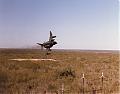
Thanks for the photo of the best damn fighter ever. Yea, yea, I know about the F-14, F-16 and others but even though it was a handful at times, what a hell of an aircraft !
Gads, I miss her.
I was "backstage" at the USAF museum yesterday - there are two new "candidates" on the ramp. One was a beater (albeit intact); the other looked pretty good. I'd have pics, but no outside photographs are allowed.Originally Posted by Phantom Flyer
Excellent and correct explanation Mr. T38 Phlyer. Thanks.Thanks for the photo of the best damn fighter ever. Yea, yea, I know about the F-14, F-16 and others but even though it was a handful at times, what a hell of an aircraft !
Gads, I miss her.
Quote:
KN and Cub:Originally Posted by Cubdriver
Nice explanation KN. I have an aero degree and I know all the science involved with supersonic inlet design, but it often takes model-specific knowledge to be able to say exactly what a design feature does even knowing the science so I generally prefer not to speculate. For example, in this case on the F-4 it is obvious the vertical blade is a boundary layer separator, but I did not know the whole thing moves. If I had known that I might have ventured a guess it changes the cross section area to slow down the air and it might have dawned on me it also relocates the shock a little bit, but model-specific information is needed to be able to say for sure.
I'm a Mechanical Engineer (but have a bit of aero on the side), and that was the explanation I was given....seemed supportable with my knowledge of aero. But here is some info to ponder:
If we say the splitter is about 3 feet in chord, the front 1.5 feet are fixed. (The portion with the devil-head and logo in the photo). The hinge for the ramp is at mid-chord. The part of the ramp where the actuator is the "trailing-edge" of the external ramp, and is even with the intake lip; behind that, the ramp hinges and tapers back to full-opening of the intake tunnel. When it actuates, it moves the "trailing-edge" of the ramp outboard, and at full-deflection, restricts the intake to about half its area (an emergency if it malfunctioned and did it at subsonic speeds; thrust was severely limited).
KN, you are right, the ramp starts moving about 1.3 Mach down low (FL200 and lower): I would see it move at 1.7 to 1.8 on Functional Check flights at FL400 (it always moved at 500 kts indicated at that altitude).
At Mach 1.00, the shock wave is supposed to make a 45 degree angle. But if the portion of the ramp that moves is supposed to deflect the wave, that looks to me like it would still be inside the intake (as viewed in the picture above).
I thought the leading-edge of the splitter triggered the shock wave, which kept it out of the intake, and the ramp was an area-restrictor.
KN, I'm curious too about the F-104: I thought the shock-cones moved to keep the wave outside...true/false?
I know some airplanes (F-15; pretty sure the F-14) have a series of baffles that move internal to the intake to guide the wave around. but the Phantom just had the one ramp that is half external; half internal.
I asked in another thread but nobody seemed to know. How did it get the the nickname "Rhino"?
Was it because it was a big, fast, powerful beast but only when moving in a straight line? If you ask it to turn, ehhhh, not so much?
Was it because it was a big, fast, powerful beast but only when moving in a straight line? If you ask it to turn, ehhhh, not so much?
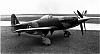
Anyone want to chance a guess of the name originally offered by McDonnell for the F-4?
Hint: think of all the other names of McDonnell aircraft and the one big name missing.
Hint: think of all the other names of McDonnell aircraft and the one big name missing.
Quote:
Was it because it was a big, fast, powerful beast but only when moving in a straight line? If you ask it to turn, ehhhh, not so much?
I was told:Originally Posted by dojetdriver
I asked in another thread but nobody seemed to know. How did it get the the nickname "Rhino"?Was it because it was a big, fast, powerful beast but only when moving in a straight line? If you ask it to turn, ehhhh, not so much?
A rhinoceros can run very fast, is ugly, dangerous to its enemies, is hard to kill (with spears), but can't turn very well.
Later, when they painted us tactical grey, the allusion was complete.

As I've posted on APC before: the Super Hornet guys can call their jet a 'Rhino,' but they're about 4 decades too late.
Back to the photo that started this thread: I visited the museum with a Captain on a trip; he was civilian-background. Right next to this F-4 is an SA-2. I told him I had one of those shot at me, west of Bahgdad.
"But that thing is huge!!!" he proclaimed.
"That's exactly what I said when we were being shot at!"

Quote:
Hint: think of all the other names of McDonnell aircraft and the one big name missing.
Originally Posted by III Corps
Anyone want to chance a guess of the name originally offered by McDonnell for the F-4?Hint: think of all the other names of McDonnell aircraft and the one big name missing.
III Corps: Spectre.

Quote:
Blofeld? Originally Posted by III Corps
No. Spectre's boss.
From the Interweb
Naming the aircraft
There were proposals to name the F4H "Satan" and "Mithras", the Persian god of light. In the end, the aircraft was given the less controversial name "Phantom II", the first "Phantom" being another McDonnell jet fighter, the FH-1 Phantom. The Phantom II was briefly given the designation F-110A and the name "Spectre" by the USAF, but neither title was used
Quote:
I'm a Mechanical Engineer (but have a bit of aero on the side), and that was the explanation I was given....seemed supportable with my knowledge of aero. But here is some info to ponder:
If we say the splitter is about 3 feet in chord, the front 1.5 feet are fixed. (The portion with the devil-head and logo in the photo). The hinge for the ramp is at mid-chord. The part of the ramp where the actuator is the "trailing-edge" of the external ramp, and is even with the intake lip; behind that, the ramp hinges and tapers back to full-opening of the intake tunnel. When it actuates, it moves the "trailing-edge" of the ramp outboard, and at full-deflection, restricts the intake to about half its area (an emergency if it malfunctioned and did it at subsonic speeds; thrust was severely limited).
KN, you are right, the ramp starts moving about 1.3 Mach down low (FL200 and lower): I would see it move at 1.7 to 1.8 on Functional Check flights at FL400 (it always moved at 500 kts indicated at that altitude).
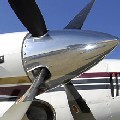
At Mach 1.00, the shock wave is supposed to make a 45 degree angle. But if the portion of the ramp that moves is supposed to deflect the wave, that looks to me like it would still be inside the intake (as viewed in the picture above).
I thought the leading-edge of the splitter triggered the shock wave, which kept it out of the intake, and the ramp was an area-restrictor.
KN, I'm curious too about the F-104: I thought the shock-cones moved to keep the wave outside...true/false?
I know some airplanes (F-15; pretty sure the F-14) have a series of baffles that move internal to the intake to guide the wave around. but the Phantom just had the one ramp that is half external; half internal.
I think you are correct about the air splitter being an attached oblique shock trigger and strong bow shocks do not form ahead of airplanes like this at low mach numbers. But assuming the flow is subsonic behind that oblique shock extending from the side of the splitter plate would not be the whole story on what is happening there. The movable ramp is to place a second “normal” shock inside the inlet at an optimum place. The term for this situtation (I looked it up) is “critical mode”- what you get when the normal shock is ideally located for best stagnation pressures, flow attachment to the intake duct, and mass flow rates into the engine. Location of the shock would be determined by pressures existing in the intake scoop and it can be moved by adjusting the intake area. Originally Posted by UAL T38 Phlyer
KN and Cub:I'm a Mechanical Engineer (but have a bit of aero on the side), and that was the explanation I was given....seemed supportable with my knowledge of aero. But here is some info to ponder:
If we say the splitter is about 3 feet in chord, the front 1.5 feet are fixed. (The portion with the devil-head and logo in the photo). The hinge for the ramp is at mid-chord. The part of the ramp where the actuator is the "trailing-edge" of the external ramp, and is even with the intake lip; behind that, the ramp hinges and tapers back to full-opening of the intake tunnel. When it actuates, it moves the "trailing-edge" of the ramp outboard, and at full-deflection, restricts the intake to about half its area (an emergency if it malfunctioned and did it at subsonic speeds; thrust was severely limited).
KN, you are right, the ramp starts moving about 1.3 Mach down low (FL200 and lower): I would see it move at 1.7 to 1.8 on Functional Check flights at FL400 (it always moved at 500 kts indicated at that altitude).
At Mach 1.00, the shock wave is supposed to make a 45 degree angle. But if the portion of the ramp that moves is supposed to deflect the wave, that looks to me like it would still be inside the intake (as viewed in the picture above).
I thought the leading-edge of the splitter triggered the shock wave, which kept it out of the intake, and the ramp was an area-restrictor.
KN, I'm curious too about the F-104: I thought the shock-cones moved to keep the wave outside...true/false?
I know some airplanes (F-15; pretty sure the F-14) have a series of baffles that move internal to the intake to guide the wave around. but the Phantom just had the one ramp that is half external; half internal.
To speculate on the action of this ramp, at design speed the intake shock is located ideally for "critical mode" and all is well and th engine gets good pressures and so forth. If the pressure drops due to a big increase in throttle setting, the shock would move forward which would place the shock sub-critical. The plate would move out reducing the area of the intake which would move the shock back again to the ideal location. Super-critical mode would similar but the opposite situation. I may have all this backwards but it is something like that.
It is also somewhat interesting why the intake duct on the F-4 is rectangular at the front rather than round as on many prior fighter designs. I think answer has to do with allowing a lower angle of flow at high angles of attack. Shape of the intake ducts in a rectangle or square was used in the F-14 and F-15 probably for the same reason. It is a little more curious on the F-15, assuming my theory is correct, because the 15 was not used for carrier landings.
Quote:
From the Interweb
Naming the aircraft
There were proposals to name the F4H "Satan" and "Mithras", the Persian god of light. In the end, the aircraft was given the less controversial name "Phantom II", the first "Phantom" being another McDonnell jet fighter, the FH-1 Phantom. The Phantom II was briefly given the designation F-110A and the name "Spectre" by the USAF, but neither title was used
Correct! The others were the Phantom, Banshee, Demon, Voodoo. McDonnell proposed "Satan" to which the Navy and USAF immediately balked. Same with the Mithras. And you are also correct about it being the F-110 for the USAF. Originally Posted by N9373M
Blofeld? From the Interweb
Naming the aircraft
There were proposals to name the F4H "Satan" and "Mithras", the Persian god of light. In the end, the aircraft was given the less controversial name "Phantom II", the first "Phantom" being another McDonnell jet fighter, the FH-1 Phantom. The Phantom II was briefly given the designation F-110A and the name "Spectre" by the USAF, but neither title was used
You do realize the Phantom came out of a McDonnell proposal for the "Super Demon"?
Getting back to the F-4 inlet design, I had one more thing to add. The F-4 is one of the last fighters not to have aerodynamic strakes located ahead of the wings on each side of the fuselage. This is why those large rectangular inlets seen on F-4s are not there on subsequent airplanes: strakes increase high angle of attack capability by energizing the boundary layer on the wings using small vortices that "hold the energy" before the flow gets to the wings. This in turn allows higher energy in the boundary layer and higher suction on the wings. Better flow adehesion means higher angles of attack and extra lift at low speed. Sounds fancy, but not really. After the F-4, inlets were almost always found underneath the wing to make room for the strakes.

