


LEPF DFR Lawsuit
 01-26-2026 | 09:24 AM
#91
Line Holder
Joined: Oct 2022
Posts: 588
Likes: 166

*New guys observe all these "experienced" captains accidents after pushing things too much like Air Florida, the AA flight into Jamaica that overran, SWA BUR accident, countless stories about how they would just dive it into the airport before that darn evil FOQA would rat them out, etc*
So their argument about mentorship may have some validity....... We were mentored not to mimic the decisions that led to those accidents.
01-26-2026 | 10:49 AM
#93

Leaves Biscoff crumbs


Joined: Jan 2020
Posts: 3,265
Likes: 941
From: Blue Juice Taste Tester
And not an ounce of irony lost
 01-26-2026 | 11:08 AM
#94
Line Holder
Joined: Nov 2024
Posts: 286
Likes: 187
Speaking the obvious here, but the expense of running a full schedule or even 50% of one through severe conditions outweighs the intake. Especially when you consider the OJIs from people getting hurt by working in such conditions. Especially since we're in the "fly a 737/A320 6 times a day on one route instead of 2 DC10/L1011 flights" era and the system just can't handle that in severe weather. Also factor in the potential tarmac delay penalties. Better the airlines just shut it down for 24-36hrs and recover it when it makes sense, it's safer, more fair to the customer, and keeps these companies from burning billions in meltdowns which is nice for the profit sharing checks too.
But hey, anything to spin a narrative about how the inexperienced the CAs that cut their teeth flying a turboprop or RJ 6 legs a day through that crap for criminal wages should have to wait/work 2-3 more years to fly an A350 out of LAX....
But hey, anything to spin a narrative about how the inexperienced the CAs that cut their teeth flying a turboprop or RJ 6 legs a day through that crap for criminal wages should have to wait/work 2-3 more years to fly an A350 out of LAX....
 01-30-2026 | 07:21 AM
#96

Line holder
Joined: Nov 2013
Posts: 4,178
Likes: 254
From: Aircraft & Seat: old & hard
More than 16,000 U.S. flight cancellations were tied to Winter Storm Fern.
Airlines will point to weather—and weather was certainly a factor. But just thinking out loud, I opine.
In addition to Fern, there is un-told stories of flying into Bangkok, Singapore or NRT figuring out "weather" at 0300 body clock. I'm sure the stories will flow. How about the beloved ITC ? Hmmm.
Fern was large, aggressive, and followed an awkward southern track. But storms like this are not new. What is new is how the system responded.
For years, airlines and flight crews have been told that new technology, refined procedures, better ground flows, and improved infrastructure would offset the challenges of winter operations. Yet when Fern arrived, the response was not resilience—it was retreat. Aircraft stayed parked. Schedules collapsed early. The system chose paralysis over pressure.
Why?
Part of the answer may be reputational. In a world where stranded passengers become viral content within minutes, airlines are acutely sensitive to public blowback. Another part may be economic: the industry increasingly recognizes that “pushing through” marginal conditions often creates cascading costs that dwarf the short-term benefit of completion metrics.
But beneath those surface explanations lies a deeper, more uncomfortable truth.
The institutional safety margin that once allowed airlines to operate confidently in dynamic, degraded conditions has been steadily eroded. That margin was built on experience—on seasoned captains who had seen these systems fail before, who understood when to press and when to pause, and who could safely bridge the inevitable gaps between procedures, technology, and reality.
That experience is being forced out.
Mandatory retirement at 65 has accelerated the loss of precisely the pilots who historically stabilized operations when weather, infrastructure, and human performance collided. The result is not just fewer gray hairs on the flight deck—it is thinner judgment, narrower risk tolerance, and a system increasingly unwilling to operate outside ideal conditions.
At the same time, airlines are absorbing soaring pilot cost-per-block-hour figures driven by rapid upgrades, compressed training timelines, and junior pilots stepping into command roles far earlier than any previous generation. Airline management has quietly acknowledged growing difficulty staffing holidays, weekends, and demanding winter schedules—especially when operations require flexibility, adaptability, and confidence under pressure.
The scuttlebutt within industrial aviation management is unmistakable: leadership understands that institutional safety has always depended on deep experience to fill the gaps in dynamic operational environments. When that experience is stripped away, the rational response is caution. Cancel early. Avoid exposure. Reduce risk by not flying.
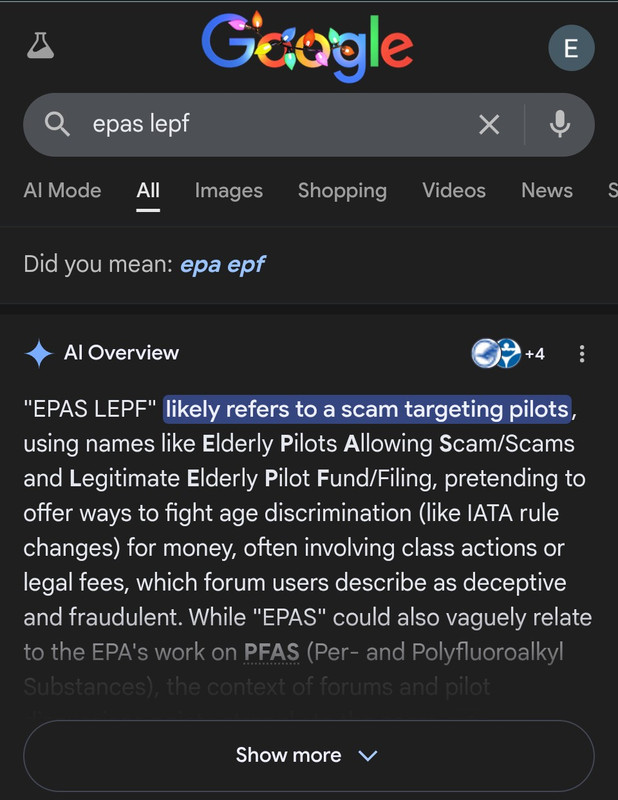
This is exactly the outcome EPAS has been warning about.
Experience is not nostalgia. It is a safety system. It is what allows airlines to operate reliably when conditions are imperfect—which they almost always are. Forced retirements do not make aviation safer; they hollow out the very buffer that keeps the system functioning.
Something is clearly different in the air—or, more accurately, not in the air.
Maybe there just isnt enough Jockeys in the stables to ride the horses in races like this in past?
Airlines will point to weather—and weather was certainly a factor. But just thinking out loud, I opine.
In addition to Fern, there is un-told stories of flying into Bangkok, Singapore or NRT figuring out "weather" at 0300 body clock. I'm sure the stories will flow. How about the beloved ITC ? Hmmm.
Fern was large, aggressive, and followed an awkward southern track. But storms like this are not new. What is new is how the system responded.
For years, airlines and flight crews have been told that new technology, refined procedures, better ground flows, and improved infrastructure would offset the challenges of winter operations. Yet when Fern arrived, the response was not resilience—it was retreat. Aircraft stayed parked. Schedules collapsed early. The system chose paralysis over pressure.
Why?
Part of the answer may be reputational. In a world where stranded passengers become viral content within minutes, airlines are acutely sensitive to public blowback. Another part may be economic: the industry increasingly recognizes that “pushing through” marginal conditions often creates cascading costs that dwarf the short-term benefit of completion metrics.
But beneath those surface explanations lies a deeper, more uncomfortable truth.
The institutional safety margin that once allowed airlines to operate confidently in dynamic, degraded conditions has been steadily eroded. That margin was built on experience—on seasoned captains who had seen these systems fail before, who understood when to press and when to pause, and who could safely bridge the inevitable gaps between procedures, technology, and reality.
That experience is being forced out.
Mandatory retirement at 65 has accelerated the loss of precisely the pilots who historically stabilized operations when weather, infrastructure, and human performance collided. The result is not just fewer gray hairs on the flight deck—it is thinner judgment, narrower risk tolerance, and a system increasingly unwilling to operate outside ideal conditions.
At the same time, airlines are absorbing soaring pilot cost-per-block-hour figures driven by rapid upgrades, compressed training timelines, and junior pilots stepping into command roles far earlier than any previous generation. Airline management has quietly acknowledged growing difficulty staffing holidays, weekends, and demanding winter schedules—especially when operations require flexibility, adaptability, and confidence under pressure.
The scuttlebutt within industrial aviation management is unmistakable: leadership understands that institutional safety has always depended on deep experience to fill the gaps in dynamic operational environments. When that experience is stripped away, the rational response is caution. Cancel early. Avoid exposure. Reduce risk by not flying.
This is exactly the outcome EPAS has been warning about.
Experience is not nostalgia. It is a safety system. It is what allows airlines to operate reliably when conditions are imperfect—which they almost always are. Forced retirements do not make aviation safer; they hollow out the very buffer that keeps the system functioning.
Something is clearly different in the air—or, more accurately, not in the air.
Maybe there just isnt enough Jockeys in the stables to ride the horses in races like this in past?
This asinine, and dangerous take seriously makes me question that. I am back to being junior, so flying with captains that range from 5 years 121 total to 30 years with the company. I prefer flying with the younger crowd because the know the procedures, have better CRM, fly predictable, and aren't grouchy. Please take Old Yeller out and make him stop barking.
01-30-2026 | 08:33 AM
#98
Leaves Biscoff crumbs
Joined: Jan 2020
Posts: 3,265
Likes: 941
From: Blue Juice Taste Tester

Thread
Thread Starter
Forum
Replies
Last Post


