


Ef-111
 05-22-2009 | 10:47 AM
#21
No one's home
Joined: Aug 2006
Posts: 1,091
Likes: 0

IIICorps stated in an earlier post that there were no A-series aircraft in the Air Force at the time the TFX program was underway. I don't think the SLUF was flying yet (which did fly with both the Navy and Air Force).
The A-1 Skyraider started flying in the Air Force in the 1963. (1963-1972)
Worked quite a few A-1s as a FAC. Lots of bombs and lots of play time. Great machine that was created on a napkin over a weekend.
05-22-2009 | 11:33 AM
#22
Moderate Moderator
Joined: Mar 2008
Posts: 5,681
Likes: 0
From: Curator at Static Display
Ed Heinemann
IIICorps:
Ed Heinemann is a hero of mine. He had a hand in some famous airplanes: A-20, A-26, the Ted Smith (Rockwell) Aero Commander (which shows a strong A-26 resemblance), the A-1, and of course, the A-4. My favorite quote of his:
"Simplicate and build-in lightness."
Is the airplane in your icon a P-47 with a counter-rotating liquid-cooled engine? (XP-47H)?
Ed Heinemann is a hero of mine. He had a hand in some famous airplanes: A-20, A-26, the Ted Smith (Rockwell) Aero Commander (which shows a strong A-26 resemblance), the A-1, and of course, the A-4. My favorite quote of his:
"Simplicate and build-in lightness."
Is the airplane in your icon a P-47 with a counter-rotating liquid-cooled engine? (XP-47H)?
05-22-2009 | 11:40 AM
#23
Gets Weekends Off
Joined: Sep 2005
Posts: 382
Likes: 0
From: Any, usually behind the wing
05-22-2009 | 12:34 PM
#24
No one's home
Joined: Aug 2006
Posts: 1,091
Likes: 0
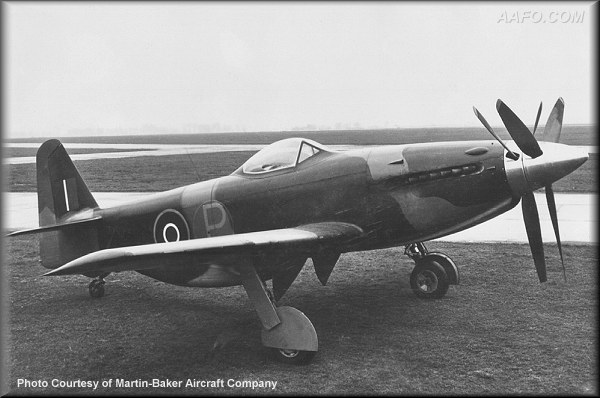 original
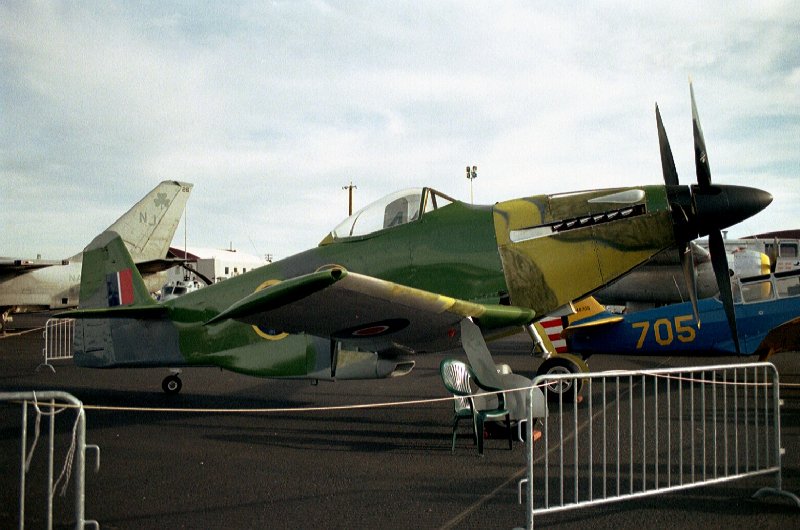 replica (wow. what an effort! The lines are not as flowing and the prop hub looks a bit off)
And this is the -47H
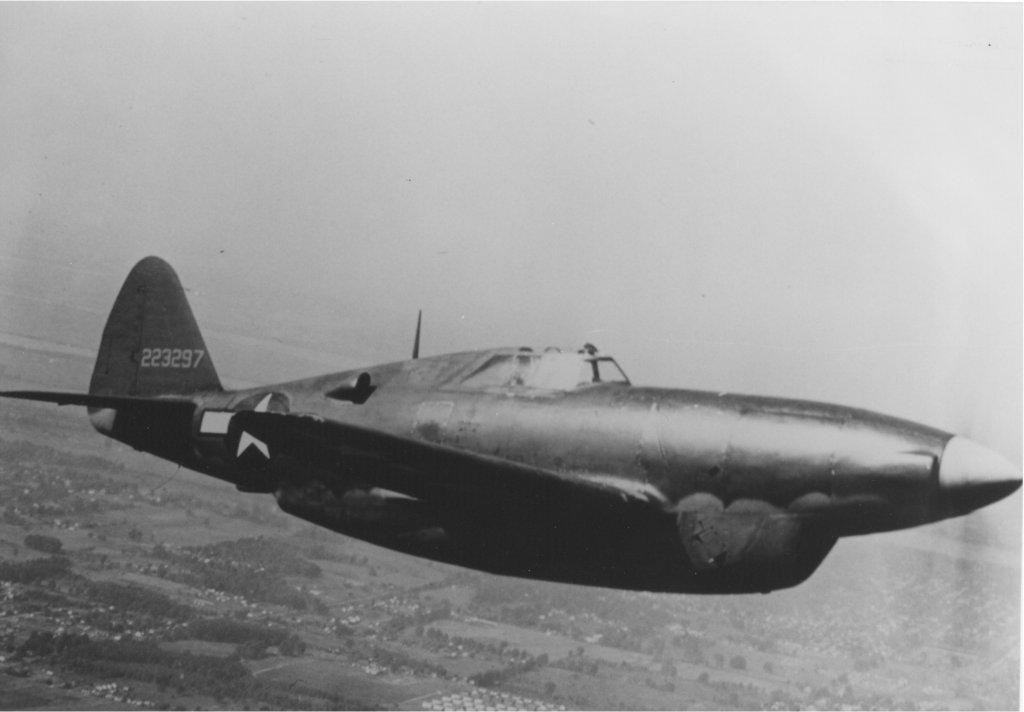 ... a bit chunkier machine.
05-22-2009 | 02:17 PM
... a bit chunkier machine.
05-22-2009 | 02:17 PM
#26
No one's home
Joined: Aug 2006
Posts: 1,091
Likes: 0
Lots of weird stuff was being tried. The trio, the -54, -55 and -56 were pretty radical departures from the regular efforts. And then there was the early TFX of sorts. The P-75 Fisher Eagle which was the "Franken-fighter' built from parts of other fighters.

And the better looking but still not-so-great performer, the -75A

MB went into ejection seats. Fisher went back to car bodies.
And the better looking but still not-so-great performer, the -75A
MB went into ejection seats. Fisher went back to car bodies.
05-22-2009 | 06:13 PM
#28
No one's home
Joined: Aug 2006
Posts: 1,091
Likes: 0
But think about it. Most aviators that know a bit of history know the P-38, P-39, P-40, P-47, P-51 and then it gets fuzzy. P-60 but it really was a night fighter. P-82 known because it was sort of a twin Mustang but between the first mentioned and the last, there was a P-something that has basically disappeared into the pages of history, not to mention the various models (A, B, C, etc). Lots of weird stuff around the world.
A while back I met a guy who flew in WWII and trained first on Stearmans. He left the USAF after flying F-106s. 100kts to Mach 2+. And then did the airline thing retiring off the -1011. The span of history is incredible.
A while back I met a guy who flew in WWII and trained first on Stearmans. He left the USAF after flying F-106s. 100kts to Mach 2+. And then did the airline thing retiring off the -1011. The span of history is incredible.
05-22-2009 | 07:02 PM
#29
Moderate Moderator
Joined: Mar 2008
Posts: 5,681
Likes: 0
From: Curator at Static Display
Lost to Oblivion
But think about it. Most aviators that know a bit of history know the P-38, P-39, P-40, P-47, P-51 and then it gets fuzzy. P-60 but it really was a night fighter. P-82 known because it was sort of a twin Mustang but between the first mentioned and the last, there was a P-something that has basically disappeared into the pages of history, not to mention the various models (A, B, C, etc). Lots of weird stuff around the world.
A while back I met a guy who flew in WWII and trained first on Stearmans. He left the USAF after flying F-106s. 100kts to Mach 2+. And then did the airline thing retiring off the -1011. The span of history is incredible.
A while back I met a guy who flew in WWII and trained first on Stearmans. He left the USAF after flying F-106s. 100kts to Mach 2+. And then did the airline thing retiring off the -1011. The span of history is incredible.
The authors had models of the airplanes that weren't built, and took photos of them. It really helped you visualize what they would have looked like. The facing page had a write-up on estimated performance, strengths, weaknesses, and why it wasn't built (or built, in the case of the ones that were).
I always wanted to see a similar book for fighters, but never did.
05-23-2009 | 04:58 AM
#30
No one's home
Joined: Aug 2006
Posts: 1,091
Likes: 0
There was a book I used to check out at my local library when I was in high school that showed every bomber ever proposed. I think it went from B-1 (of 1920-era) to XB-70. Every proposal (fighter, bomber, transport) gets a number assigned. Of course, most of us only know the ones that at least made it to mock-up stage, or further.
Not sure but I think when the MB.5 lost out, the counter-rotating prop on the Griffon did show up on the Spitfire XIV. The first solution was a five blade prop which was insufficient but beautiful. Note too the clipped wings.
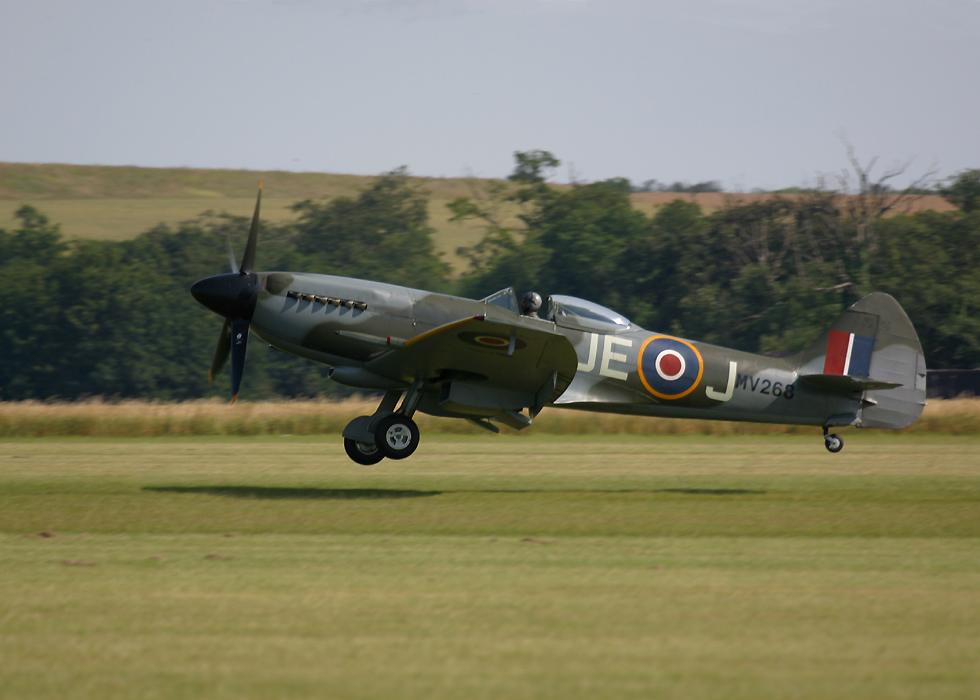
They then went to the counter-rotating prop.
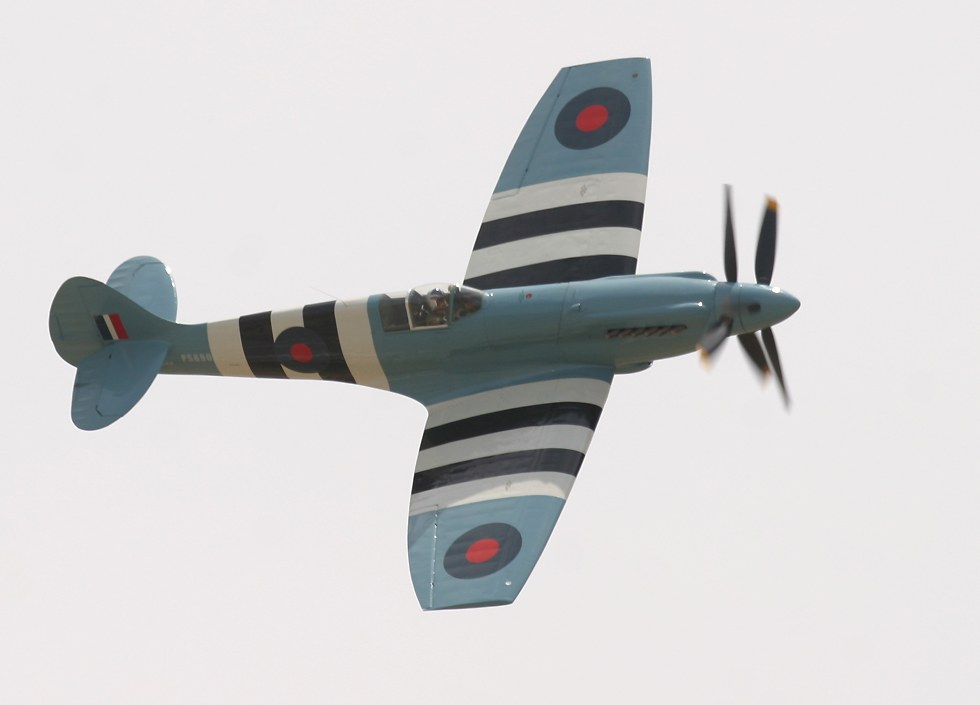
And then later comes the Westland Wyvern.

Even with the counter-rotating props, check out the size of the vertical fin, the rudder and the treatment on the horizontals.


