


Finally an AD after how many years ?


 04-11-2009 | 09:51 PM
#22

Gets Weekends Off
Joined: Mar 2008
Posts: 485
Likes: 0
From: Chris's Closet

 04-12-2009 | 08:54 PM
#23

Che Guevara
Joined: Aug 2005
Posts: 6,408
Likes: 0

AD: General Electric
AD NUMBER: 2009-07-12
MANUFACTURER: General Electric
SUBJECT: Airworthiness Directive 2009-07-12
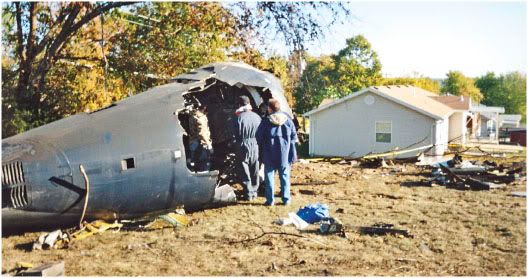
SUMMARY: The FAA is adopting a new airworthiness directive (AD) for General Electric Company (GE) CF34-1A, -3A, -3A1, -3A2, -3B, and -3B1 turbofan engines with high-pressure (HP) rotor 4-step air balance piston stationary seals (4-step seals), part numbers (P/Ns) 4923T54G01,6019T90G03, 6037T99G01, 6037T99G02, and 6037T99G03, installed. This AD requires removing the 4-step seals and incorporating an 8-step seal at the next piece-part exposure. This AD results from the investigation of an airplane accident. Both engines experienced high-altitude flameout. Rotation of the HP rotors was not maintained during descent and the engines could not be restarted. We are issuing this AD to prevent the inability to restart both engines after flameoutdue to excessive friction of the 4-step seal, which could result in subsequent forced landing of the airplane.
AD NUMBER: 2009-07-12
MANUFACTURER: General Electric
SUBJECT: Airworthiness Directive 2009-07-12
SUMMARY: The FAA is adopting a new airworthiness directive (AD) for General Electric Company (GE) CF34-1A, -3A, -3A1, -3A2, -3B, and -3B1 turbofan engines with high-pressure (HP) rotor 4-step air balance piston stationary seals (4-step seals), part numbers (P/Ns) 4923T54G01,6019T90G03, 6037T99G01, 6037T99G02, and 6037T99G03, installed. This AD requires removing the 4-step seals and incorporating an 8-step seal at the next piece-part exposure. This AD results from the investigation of an airplane accident. Both engines experienced high-altitude flameout. Rotation of the HP rotors was not maintained during descent and the engines could not be restarted. We are issuing this AD to prevent the inability to restart both engines after flameoutdue to excessive friction of the 4-step seal, which could result in subsequent forced landing of the airplane.
04-18-2009 | 04:11 PM
#24

Gets Weekends Off
Joined: Feb 2008
Posts: 645
Likes: 0
From: retired
AD: General Electric
AD NUMBER: 2009-07-12
MANUFACTURER: General Electric
SUBJECT: Airworthiness Directive 2009-07-12
SUMMARY: The FAA is adopting a new airworthiness directive (AD) for General Electric Company (GE) CF34-1A, -3A, -3A1, -3A2, -3B, and -3B1 turbofan engines with high-pressure (HP) rotor 4-step air balance piston stationary seals (4-step seals), part numbers (P/Ns) 4923T54G01,6019T90G03, 6037T99G01, 6037T99G02, and 6037T99G03, installed. This AD requires removing the 4-step seals and incorporating an 8-step seal at the next piece-part exposure. This AD results from the investigation of an airplane accident. Both engines experienced high-altitude flameout. Rotation of the HP rotors was not maintained during descent and the engines could not be restarted. We are issuing this AD to prevent the inability to restart both engines after flameoutdue to excessive friction of the 4-step seal, which could result in subsequent forced landing of the airplane.
AD NUMBER: 2009-07-12
MANUFACTURER: General Electric
SUBJECT: Airworthiness Directive 2009-07-12
SUMMARY: The FAA is adopting a new airworthiness directive (AD) for General Electric Company (GE) CF34-1A, -3A, -3A1, -3A2, -3B, and -3B1 turbofan engines with high-pressure (HP) rotor 4-step air balance piston stationary seals (4-step seals), part numbers (P/Ns) 4923T54G01,6019T90G03, 6037T99G01, 6037T99G02, and 6037T99G03, installed. This AD requires removing the 4-step seals and incorporating an 8-step seal at the next piece-part exposure. This AD results from the investigation of an airplane accident. Both engines experienced high-altitude flameout. Rotation of the HP rotors was not maintained during descent and the engines could not be restarted. We are issuing this AD to prevent the inability to restart both engines after flameoutdue to excessive friction of the 4-step seal, which could result in subsequent forced landing of the airplane.
Request To Reword the Reason for Engine Modification
Air Wisconsin Airlines requests that the proposed AD be reworded to indicate that the desired reason for the engine modification is to enhance safety, and not as a result of the accident, as stated. Otherwise, the implication is that the CF34 engine does not meet the certification requirements, which, is inaccurate. The commenter also states that they believe the justification stated in the NPRM is a gross misrepresentation of the situation and events, which led up to the referenced accident. The commenter states that the failure of the engines to restart after the flameout event was a direct result of the flight crew failing to properly follow in-flight engine restart procedures. The commenter states that every engine is tested during the aircraft certification test flight process to ensure it meets the requirements of Federal Aviation Regulation 25.903.
We do not agree. The proposed AD does not state that the 4-step seal was the cause of the accident, but that the proposed AD resulted from the investigation of the accident. The investigation found that under certain high-power, high-altitude engine shutdown events, interference between the rotating and stationary portions of the 4-step air balance piston seal can develop. We did not change the AD.
Request To Clarify "Piece-Part Exposure'' Definition
Air Wisconsin Airlines states that if the desire is to ensure engine modification at first exposure, then the requirement should indicate to accomplish the GE seal modification service bulletin at "piece-part-exposure''. Piece-part exposure should be defined as "removal of the combustion liner'' but no later than the first life- limited part shop visit, since this is when the HP turbine life-limited parts (and typically the combustion liner) are removed. The commenter also states that the proposed AD compliance requirements are not entirely clear. The air balance piston seal is a non-serialized part, which makes it difficult to track and manage the part. The commenter states that they have observed a maintenance and overhaul shop that overlooked a particular requirement to incorporate a modification, because of an interpretation of what "piece-part exposure'' was.
We partially agree. We agree that the 4-step seal should be removed when the combustion liner is removed at piece-part exposure. We do not agree removal must be tied to the life-limited parts. We changed the piece-part exposure definition in the AD to state "For the purposes of this AD, piece-part exposure means when the 4-step seal is removed from the engine or when the combustion liner is removed.''
Request To Change Incident Description Statement
GE requests that we change the incident description statement of "Both engines experienced high-altitude flameouts'' which appears in the proposed AD Summary and Unsafe Condition, to "As a result of a high-altitude airplane stall and upset, both engines experienced high- power flameouts.'' The commenter states that this change is a more accurate representation of the event.
We do not agree. As we have said previously the proposed AD does not state that the 4-step seal caused the accident. GE found during the course of the investigation that under certain high-power, high- altitude engine shutdown events, interference between the rotating and stationary portions of the 4-step air balance piston seal can develop. We did not change the AD.
Request To Change the FAA's Reason for the AD Action
GE requests that we change the FAA's reason statement for the AD action, from "We are proposing this AD to prevent the inability to restart both engines after flameout due to excessive friction of the 4- step seal, which could result in subsequent forced landing of the airplane'' to "We are proposing this AD to enhance the ability to restart an engine after flameout by reducing the friction in the 4-step seal, which could result in subsequent forced landing of the airplane.'' The commenter states that this change would be a more accurate representation and support the assessment that this is a very rare occurrence and the recommended actions are not prevalent as proven by the category level of the relevant service bulletins.
We do not agree. As already noted, the accident was not attributed to the friction of the 4-step seal. We have found an unsafe condition with the product. The proposed wording suggests the modification or replacement may not be adequate to address the inability to restart due to the friction. We did not change the AD.
Conclusion
We have carefully reviewed the available data, including the comments received, and determined that air safety and the public interest require adopting the AD with the changes described previously. We have determined that these changes will neither increase the economic burden on any operator nor increase the scope of the AD.
04-28-2009 | 01:32 PM
#25

On Reserve
Joined: Mar 2009
Posts: 11
Likes: 0
04-29-2009 | 03:28 AM
#26

Gets Weekends Off
Joined: Mar 2008
Posts: 1,133
Likes: 0
From: DAL Pilot
You gents have you info wrong as always. The Capt was not trained at Gulfstream. They were empty... so your going to tell me with a straight face that you never have done anything different with pax and with out....I call B.S. Get your facts right before you start disrespecting the dead!
04-29-2009 | 03:48 AM
#27
Gets Weekends Off
Joined: Feb 2007
Posts: 3,045
Likes: 1
From: FO

Thread
Thread Starter
Forum
Replies
Last Post
Jayps078
Regional
16
01-30-2009 08:15 PM


