


B757-200 -vs- Tu-214
 01-29-2010 | 06:25 AM
#21

AAmerican Way for AA Pay
Joined: Oct 2005
Posts: 1,617
Likes: 0
From: B-737 Pilot
01-29-2010 | 07:14 AM
#22

Gets Weekends Off
Joined: Apr 2007
Posts: 1,306
Likes: 0
From: Dream within a dream
01-30-2010 | 10:40 AM
#23

Thread Starter
Gets Weekends Off
Joined: Jan 2010
Posts: 630
Likes: 0
From: Airbus

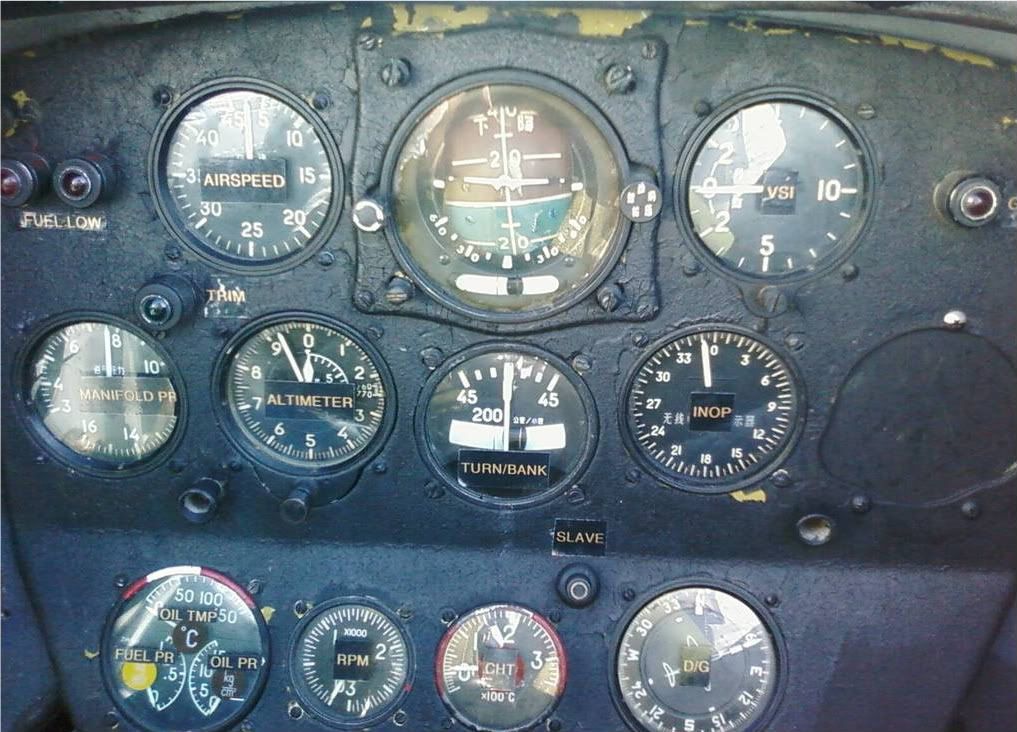
The airspeed was KM/Hr so you look down and are doing 300k. Sounds fast. Not. 186 Kts.
Vertical velocity was meters per second. 10 meters/second... hmmm 30ft/second.. times 60... jez... 1800fpm?
And they use an outside/in attitude indicator where the background is fixed and the airplane symbol moves. Again, different.
This is a sim reproduction but is fairly accurate as I remember. This is reportedly out of a Bear, a TU-95 but... it works.

Set up is not bad. Just different. (the not bad relates to the set-up, not the puke blue/green background also seen in old DC-9s <G>)
Vertical velocity was meters per second. 10 meters/second... hmmm 30ft/second.. times 60... jez... 1800fpm?
And they use an outside/in attitude indicator where the background is fixed and the airplane symbol moves. Again, different.
This is a sim reproduction but is fairly accurate as I remember. This is reportedly out of a Bear, a TU-95 but... it works.
Set up is not bad. Just different. (the not bad relates to the set-up, not the puke blue/green background also seen in old DC-9s <G>)
01-30-2010 | 03:38 PM
#24
No one's home
Joined: Aug 2006
Posts: 1,091
Likes: 0
You've not flown Soviet style attitude indicators or you wouldn't have to ask a profane question.
Think of a god's eye view of the airplane from behind. The airplane symbol moves against an essentially fixed background unlike the US style where the airplane symbol is fixed against a moving background.
Here the ADI appears to be off and it is indicating a 45deg turn nose low. The symbols seem to indicate this is a MiG-29.
Think of a god's eye view of the airplane from behind. The airplane symbol moves against an essentially fixed background unlike the US style where the airplane symbol is fixed against a moving background.
Here the ADI appears to be off and it is indicating a 45deg turn nose low. The symbols seem to indicate this is a MiG-29.
01-30-2010 | 03:44 PM
#25
No one's home
Joined: Aug 2006
Posts: 1,091
Likes: 0
Likewise, Kelleher went to Boeing and said he wanted to stay with the 737 but wanted 757-like performance. Boeing redesigned the wing, added more thrust, changed a few systems and Herb got essentially a 'baby 757' without introducing a new airplane to the fleet. It allowed SW to go trans-con but not at classic speeds of 0.74M and having to fight winter winds and maybe leaving revnue (pax/cargo) behind.
The 757 was a fun plane to fly. I enjoyed it.. but its time has come and gone...sad to say.
01-31-2010 | 06:46 PM
#26

Gets Weekends Off
Joined: Jun 2008
Posts: 1,398
Likes: 0
From: USAF
You've not flown Soviet style attitude indicators or you wouldn't have to ask a profane question.
Think of a god's eye view of the airplane from behind. The airplane symbol moves against an essentially fixed background unlike the US style where the airplane symbol is fixed against a moving background.
Here the ADI appears to be off and it is indicating a 45deg turn nose low. The symbols seem to indicate this is a MiG-29.
Think of a god's eye view of the airplane from behind. The airplane symbol moves against an essentially fixed background unlike the US style where the airplane symbol is fixed against a moving background.
Here the ADI appears to be off and it is indicating a 45deg turn nose low. The symbols seem to indicate this is a MiG-29.
 01-31-2010 | 07:19 PM
#27

Gets Weekends Off
Joined: Nov 2008
Posts: 626
Likes: 0
From: Livin' the dream
You might find this article interesting Planespotta.
Which way is up for Eastern and Western artificial horizons? - Learmount
Which way is up for Eastern and Western artificial horizons? - Learmount
01-31-2010 | 08:10 PM
#28
Gets Weekends Off
Joined: Apr 2007
Posts: 1,306
Likes: 0
From: Dream within a dream
That was a great article. I understand the points they presented, but if the Eastern-style AI is "better," how come Russian airlines are outfitting their older airplanes with Western-style AIs? And, how come modern airliners such as the Il-96 have Western-style AIs, too? Why give up a superior system just to conform?
01-31-2010 | 08:41 PM
#29
Gets Weekends Off
Joined: Mar 2009
Posts: 151
Likes: 0
From: Box Pusher
That was a great article. I understand the points they presented, but if the Eastern-style AI is "better," how come Russian airlines are outfitting their older airplanes with Western-style AIs? And, how come modern airliners such as the Il-96 have Western-style AIs, too? Why give up a superior system just to conform?
02-01-2010 | 01:19 PM
#30
No one's home
Joined: Aug 2006
Posts: 1,091
Likes: 0
It is always interesting to see the various designs and the placement of instruments. There is a website that had lots of shots of cockpits and when one stops and has to ask, "Why did they design this instrument this way and why its location??"
Post WWII (pre-six pack) the manufacturers were mostly in control of what went where along with the tactile coding for switches. Lots of airplanes landing gear up when pilots thought they had lowered gear but had lowered flaps. There is a reason the gear handle feels like a wheel and the flap handle feels like a wing. And there are regs defining what knob can be within proximity of another knob.. they have to FEEL different although many are not that much different. Anyone with time in an automated cockpit has reset the wrong system based on touch.
Post WWII (pre-six pack) the manufacturers were mostly in control of what went where along with the tactile coding for switches. Lots of airplanes landing gear up when pilots thought they had lowered gear but had lowered flaps. There is a reason the gear handle feels like a wheel and the flap handle feels like a wing. And there are regs defining what knob can be within proximity of another knob.. they have to FEEL different although many are not that much different. Anyone with time in an automated cockpit has reset the wrong system based on touch.

Thread
Thread Starter
Forum
Replies
Last Post


