


Normal FedEx Approach??
 11-26-2012 | 04:08 PM
#101

Gets Weekends Off
Joined: Jul 2007
Posts: 4,064
Likes: 37
From: 767 Captain

Just curious...and, I'm certainly not condoning that type of approach...But, do you guys really think that approach and landing were unsafe?
For the most part all I've heard on here are references to FOQA and ASAPs. Which leads me to the conclusion you're not really worried about the safety aspect of it...but, more the legality of it.
For the most part all I've heard on here are references to FOQA and ASAPs. Which leads me to the conclusion you're not really worried about the safety aspect of it...but, more the legality of it.
Yes there is doubt they were rushed or gaffed off a checklist. I see an aircraft flown on glidepath on speed. The gear likely came down late rushed/gaffed or more likely distracted. They likely pushed the 500' target and if that is the case they probably should have gone around. In the cockpit they made the decision that the approach was safe and what do you know, they were right.
The rest is between them and the company. None of my business.
The rest is between them and the company. None of my business.
Lag,
You saying they "decided" the approach was safe has about the same level of assumption as me saying they were totally distracted by their lack of gear in the last 300' of the approach and were most likely paying attention to little else.
Stabilized approach criteria is supposed to be more than just a square to fill so you're "legal". If you're stable before you enter the last 500-1000 feet of the approach, you are in a better position to:
Notice windshear (pitch, VSI, airspeed changes meeting the limits)
Scan the runway for incursions
Process radio calls
Actually monitor as the PM
Notice/deal with malfunctions
.....and I'm sure folks could add more.
There's no way you're in the best position to deal with issues in the last few miles if your gear is in transit, your flaps are not yet at their final setting, your power is moving, your airspeed is not at Vapp and your PM is still finishing up the checklist. At the very minimum, the fact that you know you're pressing or past the accepted limits is in itself a distraction.
Obviously everything can and often will work out in spite of a bad approach but only because things stay "normal". We can't know what would have happened if these guys had been thrown a curve ball in the last few seconds.
11-26-2012 | 06:27 PM
#102
Gets Weekends Off
Joined: Aug 2006
Posts: 4,184
Likes: 0
From: leaning to the left
Yep, you're right. It is safer to be stabilized at 500ft. And, even more safe to be stabilized at 1000ft. Probably safer yet to be stabilized 30 miles out at 10,000ft.
It's also safer to drive your car at the speed limit, rather than 10 over.(Except on I-240, of course) But, most of us do it. And, we don't consider it unsafe.
Again, I'm not condoning the planning of this type of approach. I went through too many power off, over the fence at +30kts while extending flaps in the flare with the old timers here, to want to go back to that technique.
My question was do all of you really think THIS approach was actually unsafe or was it just not within the parameters of our stabilized approach requirement? Is it unsafe to be configured, on G/S and +15kts at 500ft? How about +12kts? Is it unsafe to say "Before landing checklist complete" at 450ft?
Hey! Maybe this clip was taken before we had the "stabilized approach" criteria.
It's also safer to drive your car at the speed limit, rather than 10 over.(Except on I-240, of course) But, most of us do it. And, we don't consider it unsafe.
Again, I'm not condoning the planning of this type of approach. I went through too many power off, over the fence at +30kts while extending flaps in the flare with the old timers here, to want to go back to that technique.
My question was do all of you really think THIS approach was actually unsafe or was it just not within the parameters of our stabilized approach requirement? Is it unsafe to be configured, on G/S and +15kts at 500ft? How about +12kts? Is it unsafe to say "Before landing checklist complete" at 450ft?
Hey! Maybe this clip was taken before we had the "stabilized approach" criteria.
11-26-2012 | 06:50 PM
#103
Gets Weekends Off
Joined: Sep 2006
Posts: 329
Likes: 0
Yep, you're right. It is safer to be stabilized at 500ft. And, even more safe to be stabilized at 1000ft. Probably safer yet to be stabilized 30 miles out at 10,000ft.
It's also safer to drive your car at the speed limit, rather than 10 over.(Except on I-240, of course) But, most of us do it. And, we don't consider it unsafe.
Again, I'm not condoning the planning of this type of approach. I went through too many power off, over the fence at +30kts while extending flaps in the flare with the old timers here, to want to go back to that technique.
My question was do all of you really think THIS approach was actually unsafe or was it just not within the parameters of our stabilized approach requirement? Is it unsafe to be configured, on G/S and +15kts at 500ft? How about +12kts? Is it unsafe to say "Before landing checklist complete" at 450ft?
Hey! Maybe this clip was taken before we had the "stabilized approach" criteria.
It's also safer to drive your car at the speed limit, rather than 10 over.(Except on I-240, of course) But, most of us do it. And, we don't consider it unsafe.
Again, I'm not condoning the planning of this type of approach. I went through too many power off, over the fence at +30kts while extending flaps in the flare with the old timers here, to want to go back to that technique.
My question was do all of you really think THIS approach was actually unsafe or was it just not within the parameters of our stabilized approach requirement? Is it unsafe to be configured, on G/S and +15kts at 500ft? How about +12kts? Is it unsafe to say "Before landing checklist complete" at 450ft?
Hey! Maybe this clip was taken before we had the "stabilized approach" criteria.
11-26-2012 | 07:15 PM
#104

Gets Weekends Off
Joined: Aug 2006
Posts: 152
Likes: 0
From: MD11 Capt
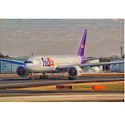
just went back and looked at the fleet status. This aircraft has a hud installed as of the latest fleet status which is before the date on the video. The acft in the video does not. Old video. Who knows when this was taken. Doesn't make it right but it does make it old.
 11-26-2012 | 07:56 PM
#106
Gets Weekends Off
Joined: Aug 2006
Posts: 4,184
Likes: 0
From: leaning to the left
Yes, it was "actually unsafe". If you don't get gear down and locked until about 200' on a normal approach, it's unsafe. Just because it doesn't end in a disaster doesn't make it safe. Apparently all the money the company spent on Threat & Error Management, Blue Threat during CQ and the spiffy posters about "Don't Hint, Don't Hope" was wasted on you since only the outcome seems to matter in your world... Not picking a fight, but I find it almost unbelievable that a professional aviator at our airline with our history would even ask that question.
Seriously...I think you'd be hard pressed to find many line pilots that think all the money spent on Blue Threat training and all the fancy magazines, books, etc., is worth it. So far, the meaningful information could have been condensed into about 4hrs of GS.
I do play by the rules. And, my approaches meet the stabilized criteria. My point is that somebody(?) decided that 500ft was the minimum altitude to be stabilized for VMC conditions. It's an arbitrary number. Doesn't necessarily mean that less than that is unsafe. It just means that's our rule. What if the number they came up with for a stabilized altitude had been 700ft? Would not being stable at 600ft be unsafe?
Last edited by Busboy; 11-26-2012 at 08:23 PM.
11-26-2012 | 08:02 PM
#108
Gets Weekends Off
Joined: Aug 2006
Posts: 152
Likes: 0
From: MD11 Capt
 11-26-2012 | 08:21 PM
#109
Gets Weekends Off
Joined: Sep 2006
Posts: 329
Likes: 0
With our history? Really? So tell me, what was our history prior to the stabilized approach required criteria?
Seriously...I think you'd be hard pressed to find many line pilots that think all the money spent on Blue Threat training and all the fancy magazines, books, etc., is worth it. So far, the meaningful information could have been condensed into about 4hrs of GS.
I do play by the rules. And, my approaches meet the stabilized criteria. My point is that somebody(?) decided that 500ft was the minimum altitude to be stabilized for VMC conditions. It's an arbitrary number. Doesn't necessarily mean that less than that is unsafe. It just means that's our rule. What if the number they came up with for a stabilized altitude had been 700ft? Would not being stable at 600ft be unsafe?
Seriously...I think you'd be hard pressed to find many line pilots that think all the money spent on Blue Threat training and all the fancy magazines, books, etc., is worth it. So far, the meaningful information could have been condensed into about 4hrs of GS.
I do play by the rules. And, my approaches meet the stabilized criteria. My point is that somebody(?) decided that 500ft was the minimum altitude to be stabilized for VMC conditions. It's an arbitrary number. Doesn't necessarily mean that less than that is unsafe. It just means that's our rule. What if the number they came up with for a stabilized altitude had been 700ft? Would not being stable at 600ft be unsafe?
Unlike the FAR example, being stable earlier on an approach rather than later does actually make a safer approach. Maybe your airplane has an automated callout at 600' or 700', but mine doesn't. Mine only has them at 1K and every 100' interval starting at 500'. Seems that might be a great reason to pick that "arbitrary number".
I'm not sure if you're just arguing for arguements sake, or you really think pushing this approach is defensible. Hope it's the former.
Last edited by av8rmike; 11-26-2012 at 08:51 PM.
11-26-2012 | 08:24 PM
#110
Gets Weekends Off
Joined: Aug 2006
Posts: 4,184
Likes: 0
From: leaning to the left
Another thing there SkyKing...By waiting to put the gear down until 150ft, he's going to have that much better performance for a go-around. If they should run into windshear or have a runway incursion.

Thread
Thread Starter
Forum
Replies
Last Post


