


Foreign Affairs resources?
 09-16-2025 | 09:24 AM
#11
Gets Weekends Off
Joined: Dec 2007
Posts: 6,434
Likes: 124
From: Window seat

I had education and exposure over years in the military. Obviously focused on threats/conflict but they certainly recognized the value of broad and deep understanding to inform planning and decisions.
<snip>
I tend to suspect that if you rely on a single source, however good, you get a one dimensional perspective.
<snip>
I tend to suspect that if you rely on a single source, however good, you get a one dimensional perspective.
Next laugh - "value of broad and deep understanding to inform planning and decisions." Hahahahhahaha. Read Cobra II by Lt. Gen Bernard Trainor. Reading you statement and watching the sh*t show that Iraq was after our "broad and deep understanding" produced, often self-inflicted.
09-16-2025 | 12:03 PM
#12
Gets Weekends Off
Joined: Jun 2022
Posts: 2,278
Likes: 441
imagine claiming to be a vet and supporting that narrative……….
09-17-2025 | 09:00 AM
#13

Prime Minister/Moderator

Joined: Jan 2006
Posts: 45,167
Likes: 803
From: Engines Turn or People Swim
I had to laugh using the military exposure and education as a foundation for global affairs. That's a hard core military U.S. perspective of world affairs.
Next laugh - "value of broad and deep understanding to inform planning and decisions." Hahahahhahaha. Read Cobra II by Lt. Gen Bernard Trainor. Reading you statement and watching the sh*t show that Iraq was after our "broad and deep understanding" produced, often self-inflicted.
Next laugh - "value of broad and deep understanding to inform planning and decisions." Hahahahhahaha. Read Cobra II by Lt. Gen Bernard Trainor. Reading you statement and watching the sh*t show that Iraq was after our "broad and deep understanding" produced, often self-inflicted.
Post cold war, it was whack a mole for a while, but eventually they realized who they really needed to focus on, and to be very deliberate about it.
I was rather surprised at the expense they went to to expose us to diversity of information, including symposiums where they flew in us and a variety of academics, government, and industry experts to remote locations to remove distractions. Not all of the speakers or background material was pro-military, or American, and none of them were retired colonels with a masters.
The caveat was that it focused on specific countries and regions. But they were shooting for broad and deep to the extent possible. In the context of this discussion (hobby level interest) I had assumed it didn't need to be stated that I'm not a career Phd academic in foreign affairs
 09-17-2025 | 06:22 PM
#14

Gets Weekends Off
Joined: Nov 2020
Posts: 2,958
Likes: 229
From: Enoch Powell Enthusiast
I'd encourage you to look at reading lists that are compiled for people who work for the American Foreign Service Association. (AFSA) afsa.org
The most basic one you can read is probably "Diplomacy" by H. Kissinger.
"The Clash of Civilizations" by S. Huntington is excellent.
"Prisoners of Geography: The Maps that Explain Everything" by T. Marshall is a fun read.
"The Tragedy of Great Power Politics" by J. Mearsheimer is great.
Beyond that it's a rabbit hole.
The more realistic and practical option is to get some popcorn and watch "Spies Like Us" with C. Chase and D. Aykroyd.
Because if you're a pilot (like me) this stuff is way, WAY beyond our paygrade and your vote is exactly equal to that of a meth-head who stumbled into a voting booth thinking there was free crack inside, passed out, but hit the "vote" button on the way down.
(One of my profs in college was a FSO. I had no idea what that was. Pity. It's like the CIA, only not evil. Probably.)
The most basic one you can read is probably "Diplomacy" by H. Kissinger.
"The Clash of Civilizations" by S. Huntington is excellent.
"Prisoners of Geography: The Maps that Explain Everything" by T. Marshall is a fun read.
"The Tragedy of Great Power Politics" by J. Mearsheimer is great.
Beyond that it's a rabbit hole.
The more realistic and practical option is to get some popcorn and watch "Spies Like Us" with C. Chase and D. Aykroyd.
Because if you're a pilot (like me) this stuff is way, WAY beyond our paygrade and your vote is exactly equal to that of a meth-head who stumbled into a voting booth thinking there was free crack inside, passed out, but hit the "vote" button on the way down.
(One of my profs in college was a FSO. I had no idea what that was. Pity. It's like the CIA, only not evil. Probably.)
Last edited by DeltaboundRedux; 09-17-2025 at 06:38 PM.
10-04-2025 | 03:17 PM
#15
Perennial Reserve
Joined: Jan 2018
Posts: 14,261
Likes: 259
Current events matter…
Babiš triumphs in Czechia, sending ripples through the EU
The right-wing populist vows to slash support for Ukraine, challenge increased military spending and confront Brussels over the Green Deal.https://www.politico.eu/article/babi...zech-election/
OCTOBER 4, 2025 5:25 PM CET
BY KETRIN JOCHECOVÁPRAGUE — Right-wing populist Andrej Babiš and his ANO movement gained a decisive win in a pivotal Czech parliamentary election, preliminary results showed on Saturday, in a vote that risks turning Czechia into another headache for the EU.
ANO was well ahead with 35 percent of the vote late Saturday, with ballots counted in more than 98 percent of electoral districts. That compared with Prime Minister Petr Fiala’s governing center-right coalition Spolu (Together), which had around 23 percent.
“I am happy,” Babiš told journalists at campaign headquartersSaturday evening. He was greeted with loud applause from ANO members while an old Italian hit by Ricchi e Poveri played over the loudspeakers.
Based on past election experience, the State Election Commission, which is compiling provisional results from more than 14,800 locations across Czechia and worldwide, is expected to confirm the final outcome by Monday. But the introduction of new mail-in voting could cause delays.
In total, 4,462 candidates and 26 parties are competing. Voter turnout was estimated at 68 percent, the highest since the 1998 elections.
The STAN (Mayors and Independents) party, the fourth member of the current governing coalition, trailed in third with 11 percent, followed by the far-right, eurosceptic Freedom and Direct Democracy (SPD) at 8 percent — down from 13 percent in recent opinion polls. The Pirate Party, former governing coalition member that quit last year, was on 8 percent.
The election surprise is the right-wing populist Motorists for Themselves party, which is on track to enter the parliament with around 7 percent despite hovering barely above the 5 percent threshold during the campaign. The far-left Stačilo! (Enough) party, which had been polling higher, is likely to fall short.
Europe has been watching the Czech elections with caution, as Babiš has vowed to scrap the ammunition initiative for Ukraine, challenge NATO’s plans to boost military spending, and confront the European Commission over the Green Deal.
Critics fear that if the right-wing billionaire regains power, the Czech Republic could become a new bête noire for the EU alongside Viktor Orbán’s Hungary and Robert Fico’s Slovakia.
“I believe that if we look at his statements and his allies in Europe — like Viktor Orbán and what he has done with Hungary — he [Babiš] will start pushing the Czech Republic toward the margins,” Czech Foreign Minister Jan Lipavský told POLITICO.
“I don’t want the Czech Republic to end up on the margins of Europe, like what happened to Hungary or Slovakia,” Lipavský said. “And today there is a big difference between being part of a willing coalition or not.”
BY KETRIN JOCHECOVÁPRAGUE — Right-wing populist Andrej Babiš and his ANO movement gained a decisive win in a pivotal Czech parliamentary election, preliminary results showed on Saturday, in a vote that risks turning Czechia into another headache for the EU.
ANO was well ahead with 35 percent of the vote late Saturday, with ballots counted in more than 98 percent of electoral districts. That compared with Prime Minister Petr Fiala’s governing center-right coalition Spolu (Together), which had around 23 percent.
“I am happy,” Babiš told journalists at campaign headquartersSaturday evening. He was greeted with loud applause from ANO members while an old Italian hit by Ricchi e Poveri played over the loudspeakers.
Based on past election experience, the State Election Commission, which is compiling provisional results from more than 14,800 locations across Czechia and worldwide, is expected to confirm the final outcome by Monday. But the introduction of new mail-in voting could cause delays.
In total, 4,462 candidates and 26 parties are competing. Voter turnout was estimated at 68 percent, the highest since the 1998 elections.
The STAN (Mayors and Independents) party, the fourth member of the current governing coalition, trailed in third with 11 percent, followed by the far-right, eurosceptic Freedom and Direct Democracy (SPD) at 8 percent — down from 13 percent in recent opinion polls. The Pirate Party, former governing coalition member that quit last year, was on 8 percent.
The election surprise is the right-wing populist Motorists for Themselves party, which is on track to enter the parliament with around 7 percent despite hovering barely above the 5 percent threshold during the campaign. The far-left Stačilo! (Enough) party, which had been polling higher, is likely to fall short.
Europe has been watching the Czech elections with caution, as Babiš has vowed to scrap the ammunition initiative for Ukraine, challenge NATO’s plans to boost military spending, and confront the European Commission over the Green Deal.
Critics fear that if the right-wing billionaire regains power, the Czech Republic could become a new bête noire for the EU alongside Viktor Orbán’s Hungary and Robert Fico’s Slovakia.
“I believe that if we look at his statements and his allies in Europe — like Viktor Orbán and what he has done with Hungary — he [Babiš] will start pushing the Czech Republic toward the margins,” Czech Foreign Minister Jan Lipavský told POLITICO.
“I don’t want the Czech Republic to end up on the margins of Europe, like what happened to Hungary or Slovakia,” Lipavský said. “And today there is a big difference between being part of a willing coalition or not.”
10-05-2025 | 11:26 AM
#16
Perennial Reserve
Joined: Jan 2018
Posts: 14,261
Likes: 259
Worth a read…
Don’t know if I totally agree with this or not, but it ought to give us all a little food for thought about what is known as well as what are unknown unknowns, and perhaps simply unknowable until it actually happens:
https://www.usni.org/magazines/proce...ves-deterrence
By Commander Thomas Duffy, U.S. Navy (Retired)
October 2025
Proceedings
Vol. 151/10/1,472
An excerpt:

Testing weapons such as the AIM-174 missiles on the Navy F/A-18F (left) and learning to fight alongside Navy F-35s and Air Force fighters such as the F-15 (right) are concrete actions that prepare for war.
U.S. NAVY
By Commander Thomas Duffy, U.S. Navy (Retired)
October 2025
Proceedings
Vol. 151/10/1,472
FEATURED ARTICLE
FacebookTwitterRedditEmailShare
COMMENTS“Deterrence . . . is the art of producing in the mind of the enemy . . . the fear to attack,” Dr. Strangelove declaims in the 1964 film that bears his name. It is a classic practical explanation articulated well before the Vietnam War reached the high-water mark of American involvement. It reflects the Cold War conviction that nuclear weapons made wars useless; they had no victors and must therefore be avoided.
This belief supported all sorts of abstract thinking and led to a situation in which game theory substituted for messier and less quantifiable ways of thinking about war. In practice, of course, the North Vietnamese had no fear of attacking; they were not deterred. They simply chose to attack with whatever (conventional) means they could lay their hands on and in ways that were difficult to respond to. The limiting factor for North Vietnam was capacity, not will. The Vietnam War was not so much a failure of deterrence as it was a demonstration of deterrence’s irrelevance.
If a widespread conventional conflict would lead inevitably to a large-scale nuclear exchange, then only a madman would talk about going to war. The actual winning and losing of battles is not a matter for polite conversation. In particular, as Michael Caine puts it in Paramount’s 1964 film Zulu, losing “looks bad in the newspapers and upsets civilians at their breakfast.” But “deterrence” allows for seemingly reasonable discussion of unreasonable events one hopes will never occur.
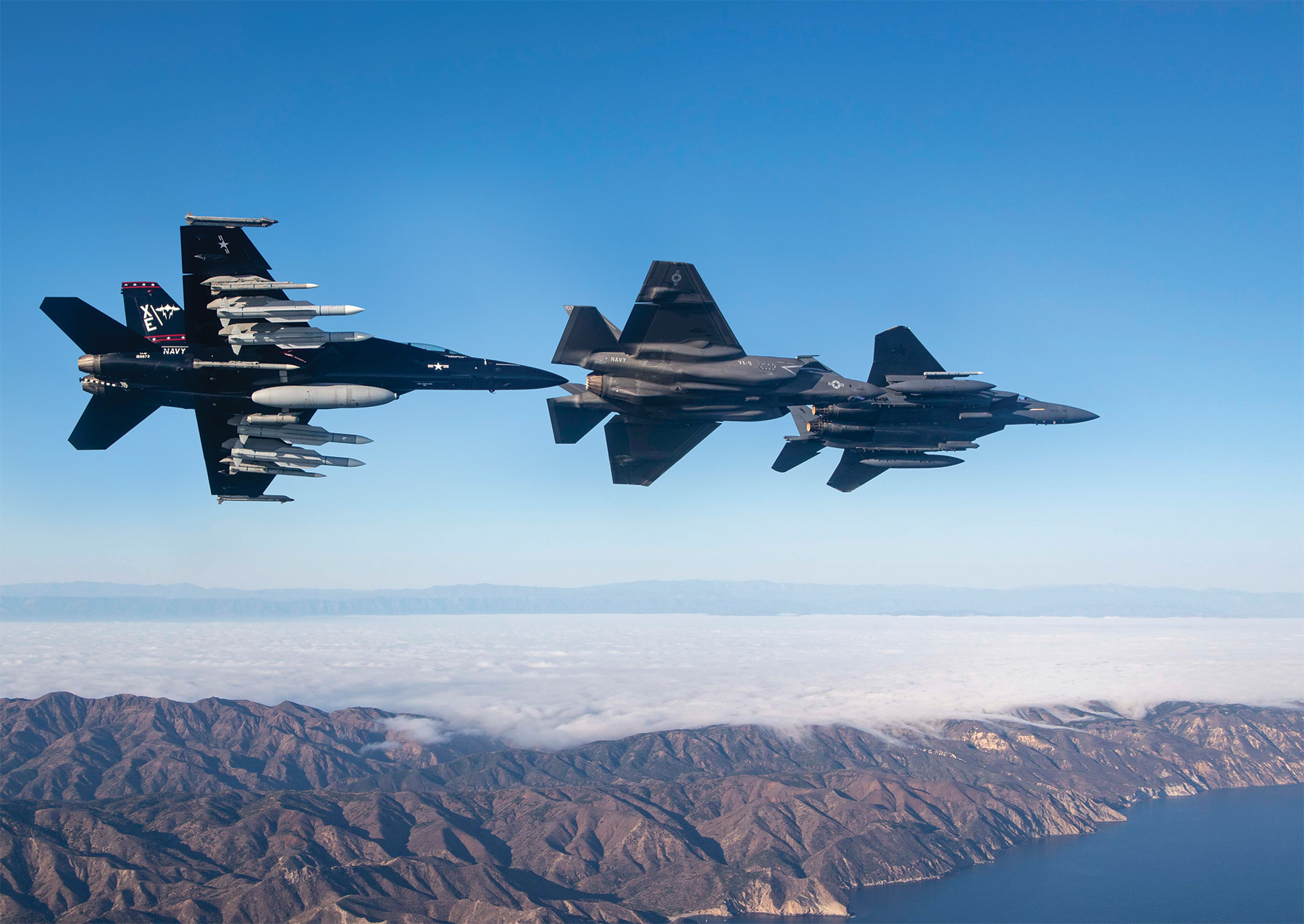 Testing weapons such as the AIM-174 missiles on the Navy F/A-18F (left) and learning to fight alongside Navy F-35s and Air Force fighters such as the F-15 (right) are concrete actions that prepare for war. U.S. Navy (Kory Hughs) That is to say, to discuss deterrence is really to talk about political forecasting—in this case, attempting to predict and influence foreign decision-makers. But consider, for example, the poor track record of domestic political forecasters regarding the outcomes of elections, even when the forecasters speak the candidates’ language and often know them personally. One might expect more humility regarding forecasts about the reactions and decisions of foreign leaders whom the forecasters do not know and whose languages they do not speak. The consequences of a failure of deterrence would be much higher than for incorrectly forecasting an election.
Political leaders can always talk about deterrence, but if it is little more than an optimistic prediction, the military cannot use it as a strategic framework. Only a maritime strategy grounded in warfighting can fully prepare the Sea Services to fight the war that will follow deterrence’s failure.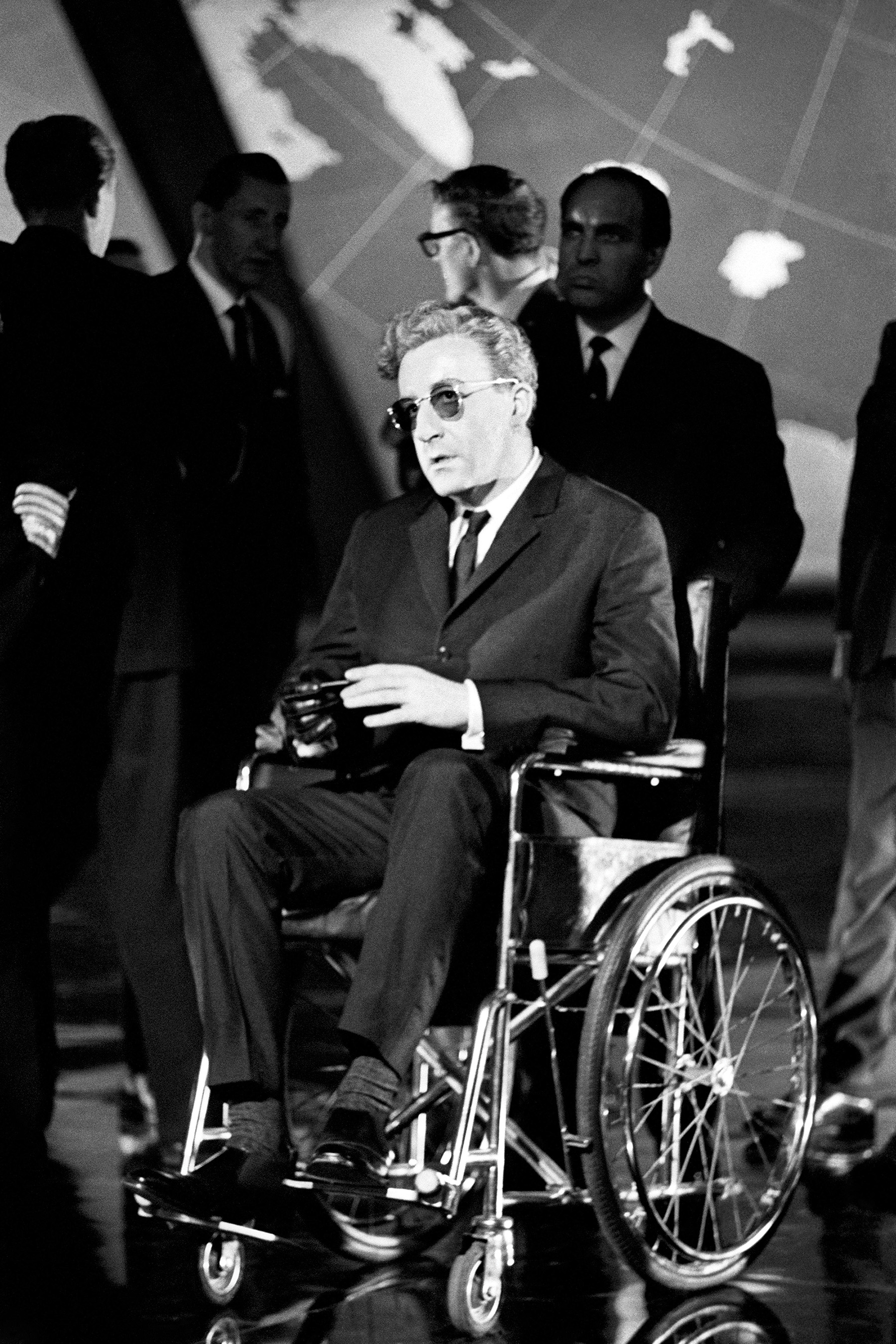 “Deterrence . . . is the art of producing in the mind of the enemy . . . the fear to attack,” says the titular character of the 1964 film, Dr. Strangelove. This idea helped lead to game theory substituting for less quantifiable ways of thinking about war. Alamy In the years following Dr. Strangelove, the United States arguably predicated its Vietnam strategy on deterrence, using calibrated military actions to send political and diplomatic signals to North Vietnam. But it is not clear that U.S. decision-makers even correctly recognized which North Vietnamese leaders were in charge and, therefore, whom they were trying to deter. As Max Hastings laid out in Vietnam: An Epic Tragedy, 1945–1975, the obscure First Secretary Le Duan “dominated Hanoi’s policy making [from 1961], as he would continue to do for the next quarter century, though the world did not know this.” Hastings compared the more widely recognized leader Ho Chi Minh with the legendary Spanish hero El-Cid, whose corpse was supposedly bound to his horse to “lead” a final charge at Valencia in 1099. Ho Chi Minh “abdicated mastery and even influence on war making, but . . . remained an indispensable figurehead, commanding respect throughout much of the world.”1
In fairness, the difficulties inherent in understanding and predicting the decision-making of foreign countries should not be minimized. Many foreign policy professionals regard the “Bush 41” foreign policy group as an A-Team—Secretary of State James Baker, Secretary of Defense Dick Cheney, and National Security Advisor Brent Scowcroft, all led by President George H. W. Bush, a former ambassador to the United Nations and director of the CIA.2 Scowcroft and Deputy Secretary of State Lawrence Eagleburger had both served in Yugoslavia—the latter for seven years, culminating as the U.S. ambassador—and both spoke Serbo-Croatian. Yet, as that country dissolved in 1991–92, even those men were at a loss about what to do.3
American political scientist Philip Tetlock has held noteworthy “Expert Political Judgment” tournaments that illustrate just how hard political forecasting can be to get right. Considering the Federation of American Scientists’ famous Doomsday Clock ticking down to midnight-—a warning of how close the United States and the Soviet Union were to a nuclear war—he realized it was set by the hunches of normally fact-bound scientists: “The clock setters were guessing.”4
Policies predicated on deterrence should be formulated with recognition of the role of conjecture in forecasting. Indeed, it is a wonder that any leader with strategic judgment would publicly frame anything in terms of deterrence, except by a desire to avoid difficult conversations. The word deterrence is now used so broadly as to become practically meaningless; a recent publication from a leading think tank manages to use the word five different ways in only two pages, rendering it in effect a synonym for statecraft.
An obvious first step would be to stop phrasing military moves in terms of deterrence, even if that risks “upsetting the civilians at their breakfast.” It would be a challenge—no one ever got relieved for talking about deterrence, much like the old slogan, “No one ever got fired for buying IBM.” But the safe choice isn’t always the best choice. Strategists should recognize they simply do not have the access or insight to be able to determine how or even whether their adversaries are interpreting deterrent or communicative moves. They should acknowledge they may not even know who the decision-makers to be deterred actually are.
Some influence could well derive from the employment of a credible fighting force, but that should be seen as a second-order effect, not a planning goal. Leaders should be humble enough to realize they have only the foggiest idea of what is going on inside their opponents’ heads.
While military leaders have next-to-little understanding or control over deterrence itself, they have rather a lot of influence over preparation for the actual employment of military force to accomplish political goals. In other words, they have significantly greater effect over fighting than they do over deterrence. Warriors should have the courage to acknowledge that deterrence is—at best—budget speak, a polite way to euphemize the grim realities of war. Put another way, there should be no shame in warriors talking more about war and less about deterrence.
https://www.usni.org/magazines/proce...ves-deterrence
Stop Phrasing Military Moves as ‘Deterrence’
Deterrence is not a strategic framework. Warfighting is.By Commander Thomas Duffy, U.S. Navy (Retired)
October 2025
Proceedings
Vol. 151/10/1,472
An excerpt:
UB MENU
Testing weapons such as the AIM-174 missiles on the Navy F/A-18F (left) and learning to fight alongside Navy F-35s and Air Force fighters such as the F-15 (right) are concrete actions that prepare for war.
U.S. NAVY
Stop Phrasing Military Moves as ‘Deterrence’
Deterrence is not a strategic framework. Warfighting is.By Commander Thomas Duffy, U.S. Navy (Retired)
October 2025
Proceedings
Vol. 151/10/1,472
FEATURED ARTICLE
FacebookTwitterRedditEmailShare
COMMENTS“Deterrence . . . is the art of producing in the mind of the enemy . . . the fear to attack,” Dr. Strangelove declaims in the 1964 film that bears his name. It is a classic practical explanation articulated well before the Vietnam War reached the high-water mark of American involvement. It reflects the Cold War conviction that nuclear weapons made wars useless; they had no victors and must therefore be avoided.
This belief supported all sorts of abstract thinking and led to a situation in which game theory substituted for messier and less quantifiable ways of thinking about war. In practice, of course, the North Vietnamese had no fear of attacking; they were not deterred. They simply chose to attack with whatever (conventional) means they could lay their hands on and in ways that were difficult to respond to. The limiting factor for North Vietnam was capacity, not will. The Vietnam War was not so much a failure of deterrence as it was a demonstration of deterrence’s irrelevance.
If a widespread conventional conflict would lead inevitably to a large-scale nuclear exchange, then only a madman would talk about going to war. The actual winning and losing of battles is not a matter for polite conversation. In particular, as Michael Caine puts it in Paramount’s 1964 film Zulu, losing “looks bad in the newspapers and upsets civilians at their breakfast.” But “deterrence” allows for seemingly reasonable discussion of unreasonable events one hopes will never occur.
Testing weapons such as the AIM-174 missiles on the Navy F/A-18F (left) and learning to fight alongside Navy F-35s and Air Force fighters such as the F-15 (right) are concrete actions that prepare for war. U.S. Navy (Kory Hughs) That is to say, to discuss deterrence is really to talk about political forecasting—in this case, attempting to predict and influence foreign decision-makers. But consider, for example, the poor track record of domestic political forecasters regarding the outcomes of elections, even when the forecasters speak the candidates’ language and often know them personally. One might expect more humility regarding forecasts about the reactions and decisions of foreign leaders whom the forecasters do not know and whose languages they do not speak. The consequences of a failure of deterrence would be much higher than for incorrectly forecasting an election.Political leaders can always talk about deterrence, but if it is little more than an optimistic prediction, the military cannot use it as a strategic framework. Only a maritime strategy grounded in warfighting can fully prepare the Sea Services to fight the war that will follow deterrence’s failure.
Forecasting Is Another Word for Guessing
“Deterrence . . . is the art of producing in the mind of the enemy . . . the fear to attack,” says the titular character of the 1964 film, Dr. Strangelove. This idea helped lead to game theory substituting for less quantifiable ways of thinking about war. Alamy In the years following Dr. Strangelove, the United States arguably predicated its Vietnam strategy on deterrence, using calibrated military actions to send political and diplomatic signals to North Vietnam. But it is not clear that U.S. decision-makers even correctly recognized which North Vietnamese leaders were in charge and, therefore, whom they were trying to deter. As Max Hastings laid out in Vietnam: An Epic Tragedy, 1945–1975, the obscure First Secretary Le Duan “dominated Hanoi’s policy making [from 1961], as he would continue to do for the next quarter century, though the world did not know this.” Hastings compared the more widely recognized leader Ho Chi Minh with the legendary Spanish hero El-Cid, whose corpse was supposedly bound to his horse to “lead” a final charge at Valencia in 1099. Ho Chi Minh “abdicated mastery and even influence on war making, but . . . remained an indispensable figurehead, commanding respect throughout much of the world.”1In fairness, the difficulties inherent in understanding and predicting the decision-making of foreign countries should not be minimized. Many foreign policy professionals regard the “Bush 41” foreign policy group as an A-Team—Secretary of State James Baker, Secretary of Defense Dick Cheney, and National Security Advisor Brent Scowcroft, all led by President George H. W. Bush, a former ambassador to the United Nations and director of the CIA.2 Scowcroft and Deputy Secretary of State Lawrence Eagleburger had both served in Yugoslavia—the latter for seven years, culminating as the U.S. ambassador—and both spoke Serbo-Croatian. Yet, as that country dissolved in 1991–92, even those men were at a loss about what to do.3
American political scientist Philip Tetlock has held noteworthy “Expert Political Judgment” tournaments that illustrate just how hard political forecasting can be to get right. Considering the Federation of American Scientists’ famous Doomsday Clock ticking down to midnight-—a warning of how close the United States and the Soviet Union were to a nuclear war—he realized it was set by the hunches of normally fact-bound scientists: “The clock setters were guessing.”4
Difficult and Unreliable
Intelligence officers like to joke that their ultimate goals are omniscience and immediacy. To eliminate guesswork would require perfect assessment of foreign decision-makers and their thought processes. To achieve the intelligence officers’ goals, the technical challenges of gaining access to all an opponent’s communications would have to be overcome. But that would be the easy part. Accurately measuring foreign interpretations of your own moves and statements—remember Dr. Strange-love’s art of introducing fear into the mind of the enemy—would require extraordinary insight into what you have accessed. In a sense, making deterrence work reliably could require an understanding that goes beyond that of the foreign decision-makers themselves.Policies predicated on deterrence should be formulated with recognition of the role of conjecture in forecasting. Indeed, it is a wonder that any leader with strategic judgment would publicly frame anything in terms of deterrence, except by a desire to avoid difficult conversations. The word deterrence is now used so broadly as to become practically meaningless; a recent publication from a leading think tank manages to use the word five different ways in only two pages, rendering it in effect a synonym for statecraft.
Means and Ends
So, if planning explicitly for deterrence is unreliable and the word itself has been broadened out of any practical meaning, how then should defense thinkers approach the future?An obvious first step would be to stop phrasing military moves in terms of deterrence, even if that risks “upsetting the civilians at their breakfast.” It would be a challenge—no one ever got relieved for talking about deterrence, much like the old slogan, “No one ever got fired for buying IBM.” But the safe choice isn’t always the best choice. Strategists should recognize they simply do not have the access or insight to be able to determine how or even whether their adversaries are interpreting deterrent or communicative moves. They should acknowledge they may not even know who the decision-makers to be deterred actually are.
Some influence could well derive from the employment of a credible fighting force, but that should be seen as a second-order effect, not a planning goal. Leaders should be humble enough to realize they have only the foggiest idea of what is going on inside their opponents’ heads.
While military leaders have next-to-little understanding or control over deterrence itself, they have rather a lot of influence over preparation for the actual employment of military force to accomplish political goals. In other words, they have significantly greater effect over fighting than they do over deterrence. Warriors should have the courage to acknowledge that deterrence is—at best—budget speak, a polite way to euphemize the grim realities of war. Put another way, there should be no shame in warriors talking more about war and less about deterrence.
10-05-2025 | 07:16 PM
#18
Perennial Reserve
Joined: Jan 2018
Posts: 14,261
Likes: 259
I think you are agreeing with the author that “forecasting is another word for guessing” with your statement. Yeah, 20 years of effort and $2.3 TRILLION in the cr@pper in Afghanistan because we couldn’t comprehend why the locals didn’t want to change their culture because it as so alien to our values.
10-05-2025 | 07:27 PM
#19
Gets Weekends Off
Joined: Apr 2011
Posts: 3,517
Likes: 143
I think you are agreeing with the author that “forecasting is another word for guessing” with your statement. Yeah, 20 years of effort and $2.3 TRILLION in the cr@pper in Afghanistan because we couldn’t comprehend why the locals didn’t want to change their culture because it as so alien to our values.
10-05-2025 | 08:02 PM
#20
Perennial Reserve
Joined: Jan 2018
Posts: 14,261
Likes: 259
Yes. Totally agree. Deterrence these days is just another euphemism for wild a$$ guessing and everybody knows it. Almost everybody. Any number of cause/effect outcomes are now conceivable. Except of course a land for peace deal. Not bloody likely. No matter what general’s plan as Russia continues to blast crap out of Ukraine right into year 4. All of it rationalized with contemptuous mockery and a bottomless bucket of cynical, absurd lies.

Thread
Thread Starter
Forum
Replies
Last Post


