


IATA Calls for Raising Pilot Age Limit to 67
 09-24-2025 | 06:50 AM
#961
Line Holder
Joined: Feb 2018
Posts: 615
Likes: 148

The only thing "urgent" for this "imminent" legislation is the need for cash to continue the grift. No imminent pilot shortage, no urgency for legislation. There is only a need to keep the money flowing. A few politicians and lobbyists have found a niche funding source of mid 6 figure earners that continually refreshes as previous donors who realize they've been scammed are too old to care.
In fact, the IATA working paper they reference suggests more data collection. Another paper recommends finding a process to align data collection across countries. This one goes on to re-evaluate raising the age after a few years of data is collected.
The only thing imminent is a discussion about steps needed to start considering a raise to the retirement age.
LEPF/EPAS is promising a movie will be in theaters any day when the director is still casting characters and the script hasn’t been finalized.
The only people saying anything is imminent are those currently accepting money.
09-24-2025 | 08:08 AM
#962
Line Holder
Joined: Mar 2016
Posts: 972
Likes: 1
IMO!
Viewed through the lens of removing the upper age limit, the IATA working paper, along with the one from Canada, Brazil, the U.K., New Zealand and Australia, lays out a path that is pragmatic.
The UN's goal is simple: remove the cap. Why? It's discriminatory and it not based in equity. Their words NOT mine!
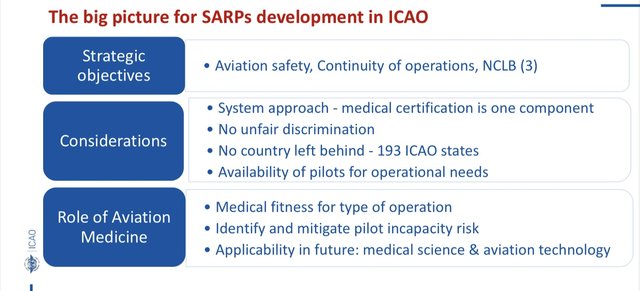
The challenge is structural. ICAO has 193 member states, many don’t even have a national airline, and many more don’t have the regulatory or medical infrastructure to support a risk based (no upper limit) oversight framework.
ICAO is, in reality, a mix of capable and incapable states.
The working papers recognize this. Step one is raise the limit to a restrictive 67. Step two: incapable states need an agreed to path to build out oversight so that, over time, the upper limit can be removed entirely. The larger aviation nations, the sponsors, are already less restrictive than ICAO today, with robust oversight in place.
They are the capable states. Most of the world is not.
This WP moves ICAO forward without leaving the incapable states without a path.
To universally remove the upper limit, capable states need confidence that the other states they recognize are operating with comparable oversight. Without that, universal recognition just isn’t possible. The Canada sponsored paper goes right at this, laying out a framework for capable states to move first, while giving others time and space to catch up.
The trajectory is clear: raise to 67, then allow bilaterial agreements between capable states to remove the ceiling, and eventually, at least in theory, set up a path for universal removal of the restrictive limit once oversight systems are strong everywhere.
But in practice, that last stage probably never happens.
Viewed through the lens of removing the upper age limit, the IATA working paper, along with the one from Canada, Brazil, the U.K., New Zealand and Australia, lays out a path that is pragmatic.
The UN's goal is simple: remove the cap. Why? It's discriminatory and it not based in equity. Their words NOT mine!
The challenge is structural. ICAO has 193 member states, many don’t even have a national airline, and many more don’t have the regulatory or medical infrastructure to support a risk based (no upper limit) oversight framework.
ICAO is, in reality, a mix of capable and incapable states.
The working papers recognize this. Step one is raise the limit to a restrictive 67. Step two: incapable states need an agreed to path to build out oversight so that, over time, the upper limit can be removed entirely. The larger aviation nations, the sponsors, are already less restrictive than ICAO today, with robust oversight in place.
They are the capable states. Most of the world is not.
This WP moves ICAO forward without leaving the incapable states without a path.
To universally remove the upper limit, capable states need confidence that the other states they recognize are operating with comparable oversight. Without that, universal recognition just isn’t possible. The Canada sponsored paper goes right at this, laying out a framework for capable states to move first, while giving others time and space to catch up.
The trajectory is clear: raise to 67, then allow bilaterial agreements between capable states to remove the ceiling, and eventually, at least in theory, set up a path for universal removal of the restrictive limit once oversight systems are strong everywhere.
But in practice, that last stage probably never happens.
09-24-2025 | 08:18 AM
#963
Gets Weekends Off
Joined: Mar 2018
Posts: 3,682
Likes: 247
IMO!
Viewed through the lens of removing the upper age limit, the IATA working paper, along with the one from Canada, Brazil, the U.K., New Zealand and Australia, lays out a path that is pragmatic.
The UN's goal is simple: remove the cap. Why? It's discriminatory and it not based in equity. Their words NOT mine!
The challenge is structural. ICAO has 193 member states, many don’t even have a national airline, and many more don’t have the regulatory or medical infrastructure to support a risk based (no upper limit) oversight framework.
ICAO is, in reality, a mix of capable and incapable states.
The working papers recognize this. Step one is raise the limit to a restrictive 67. Step two: incapable states need an agreed to path to build out oversight so that, over time, the upper limit can be removed entirely. The larger aviation nations, the sponsors, are already less restrictive than ICAO today, with robust oversight in place.
They are the capable states. Most of the world is not.
This WP moves ICAO forward without leaving the incapable states without a path.
To universally remove the upper limit, capable states need confidence that the other states they recognize are operating with comparable oversight. Without that, universal recognition just isn’t possible. The Canada sponsored paper goes right at this, laying out a framework for capable states to move first, while giving others time and space to catch up.
The trajectory is clear: raise to 67, then allow bilaterial agreements between capable states to remove the ceiling, and eventually, at least in theory, set up a path for universal removal of the restrictive limit once oversight systems are strong everywhere.
But in practice, that last stage probably never happens.
Viewed through the lens of removing the upper age limit, the IATA working paper, along with the one from Canada, Brazil, the U.K., New Zealand and Australia, lays out a path that is pragmatic.
The UN's goal is simple: remove the cap. Why? It's discriminatory and it not based in equity. Their words NOT mine!
The challenge is structural. ICAO has 193 member states, many don’t even have a national airline, and many more don’t have the regulatory or medical infrastructure to support a risk based (no upper limit) oversight framework.
ICAO is, in reality, a mix of capable and incapable states.
The working papers recognize this. Step one is raise the limit to a restrictive 67. Step two: incapable states need an agreed to path to build out oversight so that, over time, the upper limit can be removed entirely. The larger aviation nations, the sponsors, are already less restrictive than ICAO today, with robust oversight in place.
They are the capable states. Most of the world is not.
This WP moves ICAO forward without leaving the incapable states without a path.
To universally remove the upper limit, capable states need confidence that the other states they recognize are operating with comparable oversight. Without that, universal recognition just isn’t possible. The Canada sponsored paper goes right at this, laying out a framework for capable states to move first, while giving others time and space to catch up.
The trajectory is clear: raise to 67, then allow bilaterial agreements between capable states to remove the ceiling, and eventually, at least in theory, set up a path for universal removal of the restrictive limit once oversight systems are strong everywhere.
But in practice, that last stage probably never happens.

 09-24-2025 | 03:10 PM
#970
Line Holder
Joined: Apr 2018
Posts: 399
Likes: 49
So any actual news from the ongoing conference ?

Thread
Thread Starter
Forum
Replies
Last Post


