


MAX7
 01-31-2024 | 10:40 AM
#91

— No Relief On Scope —
Joined: Mar 2015
Posts: 4,584
Likes: 345
From: B737 Left Seat
01-31-2024 | 07:39 PM
#92
Line Holder
Joined: Oct 2019
Posts: 282
Likes: 1

I don't necessarily disagree with some of this, but at what point do you start holding pilots accountable? The answer from foreign governments and entities is NEVER. Case in point? Asiana. To this day, they maintain it's Boeing's fault they flew a perflectly good 777 into a seawall at SFO because GS was out and their pilots couldn't be trusted to monitor airspeed tape and its trend vector and act accordingly, or fly something other than a coupled ILS.
Lion Air and Ethiopian and the whole MCAS system are two separate issues. On one side, there are/were weaknesses in the system that needed to get fixed, but an existing procedure covered the issue - runaway stab trim which in Lion Air's case was dealt with the day prior. At some point, you may have to do that pilot $hit. It's kinda hard to do when your training consists of excessive automation dependency.
Having spent a number of years flying overseas and having been exposed to their training and operational philosophy, these crashes did not surprise me at all.... not the 777, nor the MAX. Throughout my recurrent training while overseas, I was browbeaten into engaging autopilot at 400' AGL. In a V1 cut, the first action wasn't to handfly the plane to a 1,000 feet AAE, speed it up, clean it up, set LVL change and MCT, trim it out and then autopilot on. Oh, no sir... That would get you yelled at. The first action was AUTOPILOT ON. For whatever reason it's not coming on, press the damn button harder. Mash it, but get it on. OK, trim outta place? Well, whatever it takes, but you need to put the autopilot on first. V1 cuts were always entertaining.
The focus was on engaging the autopilot, not handflying the airplane. Hand-flying was dangerous and only encouraged once on an ILS at some point between CAT 1 mins and 50'. Oh, and pure visual approaches were practically emergency procedures. That's not getting into the whole principle that CRM as we know it in the US is name only over there. Look at the flight deck crew of that Asiana and the respect between the super senior check airman equivalent, their senior captain, and the schmo in the jumpseat. Do you think an FO would speak up to super senior captain and a super senior check airman? If you think so, then you don't know the culture of face-saving. Google it... your mind will be blown.
So after these accidents, yes Boeing bears a good chunk of the burden for the quality control... there are zero arguments against that. But what about training and quality of pilots, training standards and operational philosophies? Also, at what point do business and national politics become relevant and important factors?
The easiest thing in the world is to thrash Boeing. And then there's the "it's racist to question the pilot competence in these crashes" crap which is beyond ridiculous and absurd.
Get the accountants, politicians and fear porn peddlers out of this, and I'll have a lot more faith in the safety system.
Lion Air and Ethiopian and the whole MCAS system are two separate issues. On one side, there are/were weaknesses in the system that needed to get fixed, but an existing procedure covered the issue - runaway stab trim which in Lion Air's case was dealt with the day prior. At some point, you may have to do that pilot $hit. It's kinda hard to do when your training consists of excessive automation dependency.
Having spent a number of years flying overseas and having been exposed to their training and operational philosophy, these crashes did not surprise me at all.... not the 777, nor the MAX. Throughout my recurrent training while overseas, I was browbeaten into engaging autopilot at 400' AGL. In a V1 cut, the first action wasn't to handfly the plane to a 1,000 feet AAE, speed it up, clean it up, set LVL change and MCT, trim it out and then autopilot on. Oh, no sir... That would get you yelled at. The first action was AUTOPILOT ON. For whatever reason it's not coming on, press the damn button harder. Mash it, but get it on. OK, trim outta place? Well, whatever it takes, but you need to put the autopilot on first. V1 cuts were always entertaining.
The focus was on engaging the autopilot, not handflying the airplane. Hand-flying was dangerous and only encouraged once on an ILS at some point between CAT 1 mins and 50'. Oh, and pure visual approaches were practically emergency procedures. That's not getting into the whole principle that CRM as we know it in the US is name only over there. Look at the flight deck crew of that Asiana and the respect between the super senior check airman equivalent, their senior captain, and the schmo in the jumpseat. Do you think an FO would speak up to super senior captain and a super senior check airman? If you think so, then you don't know the culture of face-saving. Google it... your mind will be blown.
So after these accidents, yes Boeing bears a good chunk of the burden for the quality control... there are zero arguments against that. But what about training and quality of pilots, training standards and operational philosophies? Also, at what point do business and national politics become relevant and important factors?
The easiest thing in the world is to thrash Boeing. And then there's the "it's racist to question the pilot competence in these crashes" crap which is beyond ridiculous and absurd.
Get the accountants, politicians and fear porn peddlers out of this, and I'll have a lot more faith in the safety system.
So true and yet so sad
02-01-2024 | 03:11 AM
#93
Line Holder
Joined: Jan 2006
Posts: 1,740
Likes: 15
02-05-2024 | 10:11 AM
#94
Line Holder
Joined: Nov 2015
Posts: 1,370
Likes: 147
I think it's entirely possible nobody ever takes deliveries of the MAX-7 or MAX-10. Even disregarding the enormous costs associated with the delivery delays, the liability to any company flying any new MAX aircraft delivered after the repeated incidents and reported process failures at both Boeing and Spirit is absolutely staggering. It's very difficult to imagine anyone at any major airline who is fully comfortable with the idea of taking delivery of any new Boeing 737 aircraft manufactured in the last few years. The potential liability that goes along with operating aircraft manufactured in the current miserably failing environment at Boeing has to run into the Billions. At some point an adult is going to stand up and announce a change in direction that does not include taking deliveries of any more 737s.
02-05-2024 | 11:27 AM
#95
Line Holder
Joined: Apr 2019
Posts: 371
Likes: 2
FEB 4
- https://www.boeing.com/737-9-updates#updates
In a message to employees, Boeing Commercial Airplanes President and CEO Stan Deal said the 737 program will spend several days in the Renton factory to focus on quality, including inspecting some undelivered airplanes for a potential nonconformance prior to delivery.
"In our drive to strengthen quality across Commercial Airplanes, your voice is critical. We asked you and everyone across our production system to speak up. Thanks to all those who have raised concerns and offered ideas.
I want to share a few updates based on the employee feedback. Key among them, the 737 program is going to dedicate several days in the Renton factory this week to focus on this important work, reflecting the premium we place on quality, safety and, ultimately, stability in our factories.
Flagging a potential issue
This past Thursday, a supplier notified us of a nonconformance in some 737 fuselages. I want to thank an employee at the supplier who flagged to his manager that two holes may not have been drilled exactly to our requirements. While this potential condition is not an immediate flight safety issue and all 737s can continue operating safely, we currently believe we will have to perform rework on about 50 undelivered airplanes.
While this issue could delay some near-term 737 deliveries, this is the only course of action given our commitment to deliver perfect airplanes every time. The days we are setting aside in the 737 program will allow time for our teams to complete the inspections and, if needed, perform the necessary rework.
Stopping travelled work
During the Quality Stand Down on the 737 program, many employees voiced frustration with travelled work and how unfinished jobs – either from our suppliers or within our factories – can ripple through the production line. These employees are absolutely right. We need to perform jobs at their assigned position.
We have to maintain this discipline within our four walls and we are going to hold our suppliers to the same standard. We recently instructed a major supplier to hold shipments until all jobs have been completed to specification. While this delay in shipment will affect our production schedule, it will improve overall quality and stability.
We will take advantage of the days in the factory so that our teams can catch up on unfinished jobs across all 737 factory positions. This is what we mean when we say that we will go slow to get it right. Work on the ramp, the flight line and the Seattle Delivery Center will continue as planned.
Implementing improvement ideas
737 program employees submitted more than 1,000 improvement ideas during the Quality Stand Down. Elizabeth Lund and her team have been sorting through the feedback and prioritizing the ideas that can and should be implemented right away.
As an example, the 737 program has set up a team to expedite the purchase of new tools so that all of our teams have the necessary equipment to perform installation work. The program has also ordered additional stands to improve ease of access to certain areas of the airplane.
There are more ideas that need to be refined before they can be put into action. Our teams will use the several days this week to workshop the ideas and try them out on the factory floor.
All of these updates emerged from employees on the front lines. Please continue to speak up and bring to life our core values of safety, quality and transparency as we work to deliver perfect airplanes to our customers."
- https://www.boeing.com/737-9-updates#updates
In a message to employees, Boeing Commercial Airplanes President and CEO Stan Deal said the 737 program will spend several days in the Renton factory to focus on quality, including inspecting some undelivered airplanes for a potential nonconformance prior to delivery.
"In our drive to strengthen quality across Commercial Airplanes, your voice is critical. We asked you and everyone across our production system to speak up. Thanks to all those who have raised concerns and offered ideas.
I want to share a few updates based on the employee feedback. Key among them, the 737 program is going to dedicate several days in the Renton factory this week to focus on this important work, reflecting the premium we place on quality, safety and, ultimately, stability in our factories.
Flagging a potential issue
This past Thursday, a supplier notified us of a nonconformance in some 737 fuselages. I want to thank an employee at the supplier who flagged to his manager that two holes may not have been drilled exactly to our requirements. While this potential condition is not an immediate flight safety issue and all 737s can continue operating safely, we currently believe we will have to perform rework on about 50 undelivered airplanes.
While this issue could delay some near-term 737 deliveries, this is the only course of action given our commitment to deliver perfect airplanes every time. The days we are setting aside in the 737 program will allow time for our teams to complete the inspections and, if needed, perform the necessary rework.
Stopping travelled work
During the Quality Stand Down on the 737 program, many employees voiced frustration with travelled work and how unfinished jobs – either from our suppliers or within our factories – can ripple through the production line. These employees are absolutely right. We need to perform jobs at their assigned position.
We have to maintain this discipline within our four walls and we are going to hold our suppliers to the same standard. We recently instructed a major supplier to hold shipments until all jobs have been completed to specification. While this delay in shipment will affect our production schedule, it will improve overall quality and stability.
We will take advantage of the days in the factory so that our teams can catch up on unfinished jobs across all 737 factory positions. This is what we mean when we say that we will go slow to get it right. Work on the ramp, the flight line and the Seattle Delivery Center will continue as planned.
Implementing improvement ideas
737 program employees submitted more than 1,000 improvement ideas during the Quality Stand Down. Elizabeth Lund and her team have been sorting through the feedback and prioritizing the ideas that can and should be implemented right away.
As an example, the 737 program has set up a team to expedite the purchase of new tools so that all of our teams have the necessary equipment to perform installation work. The program has also ordered additional stands to improve ease of access to certain areas of the airplane.
There are more ideas that need to be refined before they can be put into action. Our teams will use the several days this week to workshop the ideas and try them out on the factory floor.
All of these updates emerged from employees on the front lines. Please continue to speak up and bring to life our core values of safety, quality and transparency as we work to deliver perfect airplanes to our customers."
02-05-2024 | 11:30 AM
#96
Line Holder
Joined: Apr 2019
Posts: 371
Likes: 2
Boeing sees more rough weather as supplier finds new 737 Max flaw
 Mathieu Lewis-Rolland
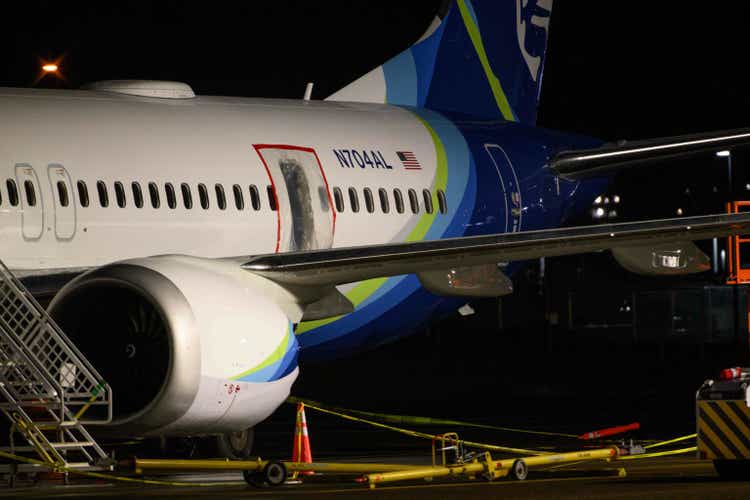
Spirit AeroSystems (NYSE:SPR) discovered two holes in some 737 Max fuselages may not have been drilled in line with Boeing's (NYSE:BA) requirements, because of which the aircraft maker will need to perform more work on impacted airplanes, likely delaying some near-term deliveries.
Shares of Boeing (BA) fell 1.8% before the bell on Monday, while Spirit Aero (SPR) slid 4.7%.
"While this potential condition is not an immediate flight safety issue and all 737s can continue operating safely, we currently believe we will have to perform rework on about 50 undelivered airplanes," Boeing (BA) Commercial Airplanes CEO Stan Deal told employees.
An "edge margin" (spacing problem) was found in the holes drilled on a window frame for some jets, industry sources told Reuters, which first reported the news.
"We instructed a major supplier to hold shipments until all jobs have been completed to specification," said Deal, adding that the delay will impact Boeing's (BA) production schedule. "We will take advantage of the days in the factory (Renton 737 plant) so that our teams can catch up on unfinished jobs across all 737 factory positions."
Boeing has been facing heat over safety and quality in its 737 Max aircraft after an Alaska Airlines' midair blowout.
U.S. aviation regulator FAA last month ordered Boeing (BA) to cap 737 production at the current rate of 38 jets a month because of the quality lapses.

 09-07-2024 | 07:02 AM
#99
Gets Weekends Off
Joined: Oct 2006
Posts: 3,696
Likes: 325
CP said Boeing has a fix for the cowl ice issue. Once FAA blesses it, they’ll reapply for certification. Once that happens it’s 4-6 mos before we start flying them….retrofit existing planes, proving runs, etc
09-07-2024 | 09:29 AM
#100
Gets Weekends Off
Joined: Dec 2011
Posts: 2,045
Likes: 257
From: A320 FO
What's the fix? How about a allocating a little space on those huge screens for a CAS? Ice detectors and automatic anti-ice are cool too.

Thread
Thread Starter
Forum
Replies
Last Post


