


NAI Approved
 12-09-2016 | 04:56 AM
#131

Line Holder
Joined: Dec 2013
Posts: 535
Likes: 22
From: 756 left...

It is a matter of priorities. You might remember the global economic crisis? Saving 260,000 auto jobs much to the chagrin of the Republicans? Two wars? Killing bin Laden? Health care with no help from Republicans? Even with all that going on the Dems did manage to improve some of the labor provisions in 2009, but obviously not enough.
You said it brother!
You said it brother!
When your done thinking that Barry was the ultimate savior of the world and lowered sea levels maybe you can come back to the reality that he wasn't that friendly to labor?
12-09-2016 | 05:42 AM
#132

Banned
Joined: Apr 2012
Posts: 216
Likes: 0
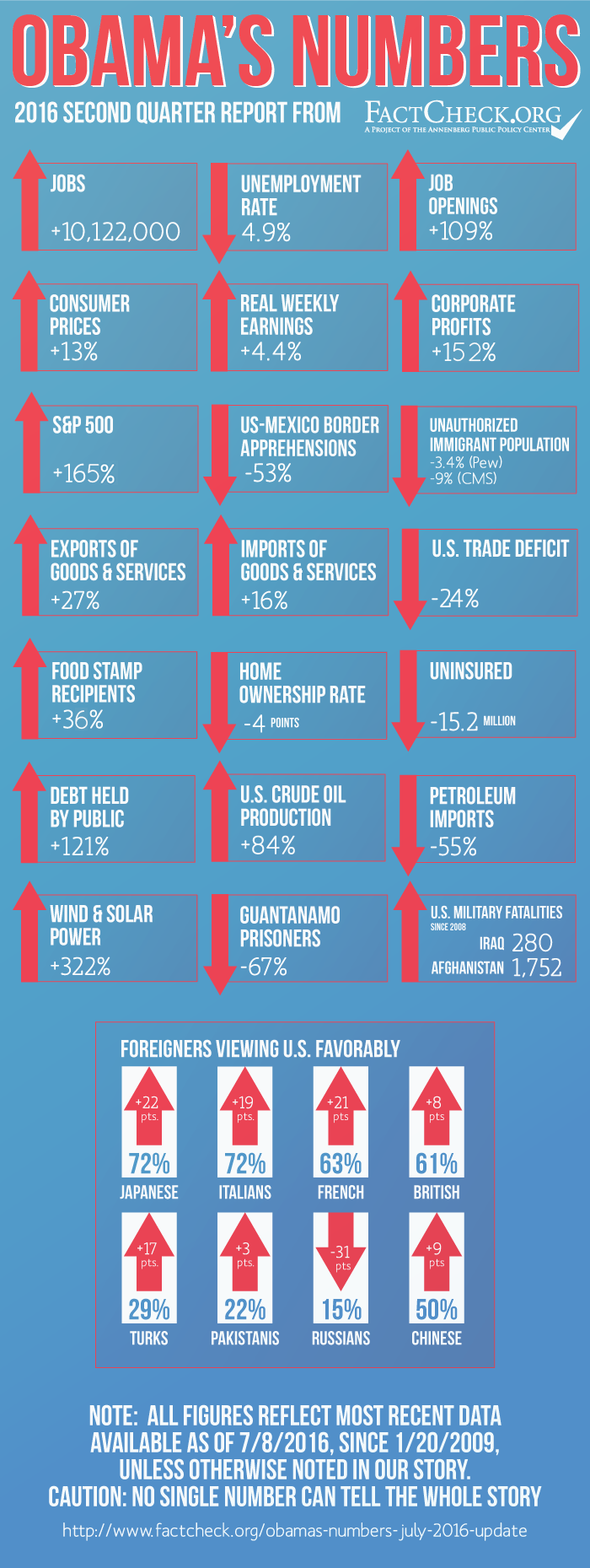
Here are some numbers that show how far we have come economically under Obama. Good and bad.
 [/QUOTE]
any serious economist (of which there are none writing on this forum) understands that the unemployment rate is down because the labor participation rate is down.
and that addresses the error in just one of the numbers in the chart. who knows how the other numbers were manipulated...
[/QUOTE]any serious economist (of which there are none writing on this forum) understands that the unemployment rate is down because the labor participation rate is down.
and that addresses the error in just one of the numbers in the chart. who knows how the other numbers were manipulated...
12-09-2016 | 05:50 AM
#134
Gets Weekends Off
Joined: Aug 2013
Posts: 2,159
Likes: 1
I do think, on a different note the entire unfolding of events validates how important it was to get the extension done as well as that Delta plus language. Kudos to ALPA for that. I would not want to be negotiating right now in light of NAI's approval and the downward pressure their rates of pay will put on pilot's union negotiators. I wonder what American (Allied Pilots Associations) take is right now?
12-09-2016 | 06:25 AM
#136
Gets Weekends Off
Joined: Nov 2010
Posts: 1,785
Likes: 0
 12-09-2016 | 07:47 AM
#138

Line Holder
Joined: Oct 2010
Posts: 671
Likes: 8
From: CRJ FO

But it's probably a right wing conspiracy.
12-09-2016 | 07:58 AM
#139
Gets Weekends Off
Joined: Nov 2010
Posts: 1,785
Likes: 0
Trump labor secretary pick Andy Puzder talked about replacing workers with robots
Dec 9, 2016 9:26 a.m. ET
President-elect Donald Trump’s potential pick for labor secretary, Andy Puzder, has talked up the benefits of replacing real human workers with technology.
“They’re always polite, they always upsell, they never take a vacation, they never show up late, there’s never a slip-and-fall, or an age, sex or race discrimination case,” said Puzder, chief executive of CKE Restaurants Inc., in an interview with Business Insider earlier this year. CKE owns, operates and franchises restaurant chains including Carl’s Jr. and Hardee’s.
In the interview, Puzder discussed job automation and the rising cost of labor in the restaurant industry. The potential labor secretary has written opinion pieces for The Wall Street Journal in which he talked about his opposition to raising the minimum wage.
“The point is simple: The feds can mandate a higher wage, but some jobs don’t produce enough economic value to bear the increase,” Puzder wrote in an October 2014 commentary piece.
More recently, Puzder wrote an opinion piece against raising the salary threshold for overtime pay.
“By increasing the labor costs, the new Labor Department rule is a government-created disadvantage for restaurants, which are already being squeezed,” he wrote.
On Dec. 1, Texas District Court Judge Amost Mazzant blocked the overtime rule, which would’ve raised the eligible salary to $47,476 per year from $23,660. The rule would’ve applied to 4.2 million workers.
The National Retail Federation, which cheered the judge’s ruling has also put out a statement praising Trump’s labor choice.
“Andrew Puzder is someone with the real-world experience to understand workforce issues and how jobs are created,” said NRF Senior Vice President for Government Relations David French in a statement.
Not everyone is enthusiastic about Puzder.
“Putting one of the worst fast-food CEOs in charge of national labor policy sends a signal to workers that the Trump years are going to be about low pay, wage theft, sexual harassment and racial discrimination,” reads a statement from the organization Fight for $15. The group attributes the statement to Carl’s Jr. cook Rogelio Hernandez and Hardee’s cashier Lacretia Jones.
“Puzder is against unions, calls the minimum wage and overtime ‘restrictions’ and employees ‘extra cost,’ and even said he wants to fire workers like us and replace us with machines that can’t take vacations or sue their employers when they break the law,” the statement said.
In the Business Insider interview, Puzder said he was inspired by an automated restaurant, Eatsa, which serves healthy dishes like spiced apple quinoa.
“We could have a restaurant that’s focused on all-natural products and is much like an Eatsa, where you order on a kiosk, you pay with a credit or debit car, your order pops up, and you never see a person,” Puzder said.
The number of Americans who applied for unemployment benefits in December fell by 10,000 to 258,000, according to the latest government numbers. And last Friday, the government said that the unemployment rate hit a nine-year low of 4.9%.
12-09-2016 | 08:03 AM
#140
Gets Weekends Off
Joined: Nov 2010
Posts: 1,785
Likes: 0
Why Labor Force Participation Is Still so Low
The U.S. unemployment rate doesn't tell the full story
by Allison Schrager
January 19, 2015
The latest U.S. jobs report, released on Jan. 9, found that unemployment in the U.S. is nearly back to normal, at 5.6 percent. Still, a more telling statistic, the share of Americans in the labor force (people working or looking for work), barely budged at just 62.7 percent. That figure was significantly higher before the recession, at around 66 percent, but labor force participation started to fall in 2009 and has since been trending down.
This seems to confirm the worst fears of economists Larry Summers and Brad DeLong, who in a 2012 paper warned that unemployment could permanently damage the economy. Without government spending, that paper noted, unemployed people who couldn't find work would get discouraged, lose their skills, and drop out of the labor force indefinitely.
New research questions whether that's what has been happening in recent years. Data from the the Census Bureau's Survey of Income and Program Participation, as Bloomberg Businessweek reported, shows that most people who left the labor force during the recession came from high-income households. That's surprising because skilled people with college degrees (who tend to have relatively higher incomes) faced much lower rates of unemployment. So why aren't these people in the labor force today? According to data from the Current Population Survey (from the Bureau of Labor Statistics and the Census Bureau) there are three main reasons the labor force participation rate fell: retirement, disability, and more people in school—with a discouraged worker falling into any of those categories.
The primary reason people don't work is retirement, and more people retired during the recession:
As the chart above indicates, a larger share of the U.S. population is now retired. That can mean either more discouraged workers (who may retire earlier than planned) or an older population. But as the second chart shows, the share of people aged 55 to 64 who retired actually fell from 20 to 16 percent from 2006 to 2014. Rather than dropping out of the labor force because they couldn't find a job, older Americans kept working. In other words, the recession seemed to keep more elderly Americans in labor force, probably because people couldn't afford to retire when they had originally planned. A growing number of retirees did contribute to the dwindling labor force, but only because the American population got older. There isn't much evidence that droves of elderly workers got frustrated with their job prospects and retired early.
The second-biggest reason people don't work is school. The share of non-working students increased from 5.8 percent in 2006 to to a peak of 7.1 percent in 2012; it comprised mostly individuals younger than 35. That figure increased because people went back to school when they couldn't find work, though it's likely to improve: Members of this group will probably look for work when the economy improves, and they may even have learned new skills. In fact, there are already signs that some people who went to school are returning to the labor force. School enrollment among those aged 20 to 29 is down from the its 2010 peak. In 2013 the share of non-working students started to fall.
Combined, these trends explain why high-income households account for most of the shrinking labor force. There are fewer workers because more young people went to school (their parents' income counts as household income) and because only people who could afford to retire did so. But retirees and students can't account for all of the decline: Since the recession, the number of people not working because of a disability has steadily increased. And their numbers continue to increase five years into the recovery.
It may be that frustrated workers are using disability as a reason to drop out of the labor force—especially older people who couldn't afford early retirement. But there's also been a small increase in younger disabled workers, those aged from 25 to 54. In 2006, 4.5 percent of them didn't work because of a disability, compared to 5.3 percent in 2014. That trend is particularly worrisome because few will reenter the labor force.
What does it all mean? The fact that a majority of labor force opt-outs are students or retirees from high-income households suggests that the recession wrought less damage to the U.S. workforce than was initially feared. Those people will either go back to work or would have left the labor force anyway. Still, the growing number of disabled workers indicates that the recession did inflict some permanent damage to the American labor force, and this could take years to repair.
The U.S. unemployment rate doesn't tell the full story
by Allison Schrager
January 19, 2015
The latest U.S. jobs report, released on Jan. 9, found that unemployment in the U.S. is nearly back to normal, at 5.6 percent. Still, a more telling statistic, the share of Americans in the labor force (people working or looking for work), barely budged at just 62.7 percent. That figure was significantly higher before the recession, at around 66 percent, but labor force participation started to fall in 2009 and has since been trending down.
This seems to confirm the worst fears of economists Larry Summers and Brad DeLong, who in a 2012 paper warned that unemployment could permanently damage the economy. Without government spending, that paper noted, unemployed people who couldn't find work would get discouraged, lose their skills, and drop out of the labor force indefinitely.
New research questions whether that's what has been happening in recent years. Data from the the Census Bureau's Survey of Income and Program Participation, as Bloomberg Businessweek reported, shows that most people who left the labor force during the recession came from high-income households. That's surprising because skilled people with college degrees (who tend to have relatively higher incomes) faced much lower rates of unemployment. So why aren't these people in the labor force today? According to data from the Current Population Survey (from the Bureau of Labor Statistics and the Census Bureau) there are three main reasons the labor force participation rate fell: retirement, disability, and more people in school—with a discouraged worker falling into any of those categories.
The primary reason people don't work is retirement, and more people retired during the recession:
As the chart above indicates, a larger share of the U.S. population is now retired. That can mean either more discouraged workers (who may retire earlier than planned) or an older population. But as the second chart shows, the share of people aged 55 to 64 who retired actually fell from 20 to 16 percent from 2006 to 2014. Rather than dropping out of the labor force because they couldn't find a job, older Americans kept working. In other words, the recession seemed to keep more elderly Americans in labor force, probably because people couldn't afford to retire when they had originally planned. A growing number of retirees did contribute to the dwindling labor force, but only because the American population got older. There isn't much evidence that droves of elderly workers got frustrated with their job prospects and retired early.
The second-biggest reason people don't work is school. The share of non-working students increased from 5.8 percent in 2006 to to a peak of 7.1 percent in 2012; it comprised mostly individuals younger than 35. That figure increased because people went back to school when they couldn't find work, though it's likely to improve: Members of this group will probably look for work when the economy improves, and they may even have learned new skills. In fact, there are already signs that some people who went to school are returning to the labor force. School enrollment among those aged 20 to 29 is down from the its 2010 peak. In 2013 the share of non-working students started to fall.
Combined, these trends explain why high-income households account for most of the shrinking labor force. There are fewer workers because more young people went to school (their parents' income counts as household income) and because only people who could afford to retire did so. But retirees and students can't account for all of the decline: Since the recession, the number of people not working because of a disability has steadily increased. And their numbers continue to increase five years into the recovery.
It may be that frustrated workers are using disability as a reason to drop out of the labor force—especially older people who couldn't afford early retirement. But there's also been a small increase in younger disabled workers, those aged from 25 to 54. In 2006, 4.5 percent of them didn't work because of a disability, compared to 5.3 percent in 2014. That trend is particularly worrisome because few will reenter the labor force.
What does it all mean? The fact that a majority of labor force opt-outs are students or retirees from high-income households suggests that the recession wrought less damage to the U.S. workforce than was initially feared. Those people will either go back to work or would have left the labor force anyway. Still, the growing number of disabled workers indicates that the recession did inflict some permanent damage to the American labor force, and this could take years to repair.

Thread
Thread Starter
Forum
Replies
Last Post


