


Any "Latest & Greatest" about Delta?
 04-02-2014 | 06:13 AM

Gets Weekends Off
Joined: Jan 2008
Posts: 396
Likes: 0
From: A somewhere

They don't worry about flying a bunch of half empty widebody jets around the world. Last week on the way to Dubai we heard one of their A380's checking in with ATC at FL400 just after exiting the Nat tracks over Ireland.
You gotta be pretty light to be that high, that far out. (about 7 hours out of DXB)
I'd like to know what their system average load factor is, and what their "Break Even" load factor is, or if they even have one.
You gotta be pretty light to be that high, that far out. (about 7 hours out of DXB)
I'd like to know what their system average load factor is, and what their "Break Even" load factor is, or if they even have one.
Emirates revenue reached a record high of AED 73.1 billion (US$ 19.9 billion) growing by 17 per cent when compared to the 2011-12 financial year. Although the average price of jet fuel did not increase over last year, it remains high and has impacted Emirates’ bottom line with the airline’s profit at AED 2.3 billion (US$ 622 million) representing an increase of 52 per cent over last year’s results.
Carrying a record 39.4 million passengers, an increase of 16 per cent, Emirates logged a robust Passenger Seat Factor, at 80 per cent, remaining consistent with last year’s results. With an increase in seat capacity-Available Seat Kilometres (ASKMs) of 18 per cent the result highlights a strong consumer desire to fly on Emirates’ state-of-the-art aircraft.
04-02-2014 | 06:20 AM
Gets Weekends Off
Joined: Jan 2008
Posts: 396
Likes: 0
From: A somewhere
Another tidbit from the above report:
"Revenue generated from across Emirates’ six regions continues to be well balanced, with no region contributing more than 30 per cent of overall revenues. East Asia and Australasia remained the highest revenue contributing region with AED 20.9 billion (US$ 5.7 billion) up 15 per cent from 2011-12. Europe, up 18 per cent to AED 20.1billion (US$ 5.5 billion) and the Americas up 24 per cent to AED 8.3 billion (US$ 2.3 billion) saw the most significant growth, reflecting new destinations as well as increased frequency and capacity to these regions."
"Revenue generated from across Emirates’ six regions continues to be well balanced, with no region contributing more than 30 per cent of overall revenues. East Asia and Australasia remained the highest revenue contributing region with AED 20.9 billion (US$ 5.7 billion) up 15 per cent from 2011-12. Europe, up 18 per cent to AED 20.1billion (US$ 5.5 billion) and the Americas up 24 per cent to AED 8.3 billion (US$ 2.3 billion) saw the most significant growth, reflecting new destinations as well as increased frequency and capacity to these regions."
04-02-2014 | 06:57 AM

veut gagner à la loterie
Joined: Apr 2008
Posts: 23,286
Likes: 0
From: Light Chop
Some FWIW perspective:

04-02-2014 | 07:11 AM

Line Holder
Joined: Nov 2005
Posts: 729
Likes: 0
From: Driving to work & Looking Left @ the Surf!!
04-02-2014 | 08:04 AM
Moderator
Joined: Dec 2007
Posts: 7,263
Likes: 105
From: DAL 330
 04-02-2014 | 08:11 AM
Line Holder
Joined: Sep 2007
Posts: 1,257
Likes: 5
I think BA has a couple more than 0 744. According to their website they have 57.
Don't get me wrong, GREAT graph,
Don't get me wrong, GREAT graph,
04-02-2014 | 08:15 AM

Can't abide NAI
Joined: Jun 2007
Posts: 12,078
Likes: 15
From: Douglas Aerospace post production Flight Test & Work Around Engineering bulletin dissembler
Who knew?
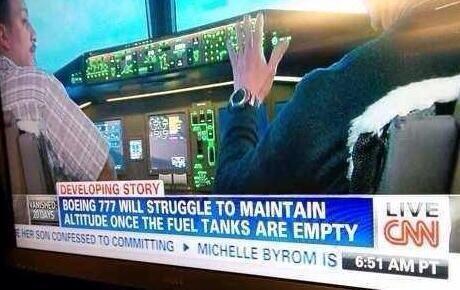
777's can't maintain altitude without fuel? 777's autothrottles don't work when not engaged? What gives with that airplane?
777's can't maintain altitude without fuel? 777's autothrottles don't work when not engaged? What gives with that airplane?
04-02-2014 | 08:26 AM
Line Holder
Joined: Sep 2007
Posts: 1,257
Likes: 5
Asiana Says Boeing 777's Warning System Inadequate In SFO Crash
04-02-2014 | 08:41 AM
Gets Weekends Off
Joined: Feb 2006
Posts: 1,242
Likes: 0
04-02-2014 | 08:46 AM
Can't abide NAI
Joined: Jun 2007
Posts: 12,078
Likes: 15
From: Douglas Aerospace post production Flight Test & Work Around Engineering bulletin dissembler
Originally Posted by Aviation Week & Space Technology
Could a quite spectacular speculative bubble pop in the next few years? Most of the world's airlines are ordering a lot of commercial transports, perhaps more than they need. If this is the case, cancellations may not be far behind, to be followed by a serious industrial crisis. In light of overcapacity, manufacturers would have to slash production rates. Such a worst-case scenario is said to be a hot topic behind closed doors in Toulouse and Chicago because both major manufacturers are selling significantly more aircraft than they currently produce.
Their backlog is impressive, to say the least—more than 5,000 aircraft each—while last year they delivered a combined 1,274 “next-generation” single-aisles and widebodies. Most industrial segments can only dream about enjoying such a bounty.
But is everything as rosy as financial analysts claim? This key question must remain shrouded because both Airbus and Boeing zealously guard details into the inner workings of their backlogs. This much in known. Last year, an estimated 650 aircraft were definitively parked.
Although the ongoing financial upturn has led to slightly increased production rates—mostly for the A320 and 737 series—the two rivals do not plan to expand beyond that. They certainly fear the damage a global downturn could inflict to their industry. And they also believe some customers, including startups and low-fare players, are excessively optimistic when devising long-term fleet planning and could face serious difficulties when it comes to paying for their orders. Manufacturers are experts in overbooking and most probably sell some aircraft to more than a single customer to avoid the risk of having to park white tails in front of their final assembly lines, where they'll gather dust for who knows how long.
The key question, today, is to try to determine if the airline industry will continue to be dominated by economic cycles—as it has been in the past several decades—or will instead enjoy a long-lasting stability. The International Air Transport Association's recent robust financial forecasts indicate its 240-member airlines will post nearly $20 billion in combined annual profits after achieving disappointing results over the past several years. However, again, this does not mean airlines are insulated from financial losses farther down the path, which could force them to cut capacity and cancel aircraft orders.
Contrary to the projections of other experts, Paris-based ID Aero—a noted consultancy covering the airline industry, including in-depth traffic analyses—does not see a downturn materializing later in the decade. Chief Executive Jacques Delys is adamant that if a downturn were to occur in the next three years it would be of limited scale. Since the 1970s, he says, airlines routinely entered into a series of downturns—of limited duration—about every 8.5 years. During those periods some aircraft deliveries had to be delayed and rescheduled, usually by two years.
Based on past experience, Delys adds, the next downturn could in theory begin in late 2015 or early 2016, and some aircraft deliveries could be put on hold starting in 2017. But this is not the most probable scenario, he says. After all, in the next 20 years, airlines will need to take delivery of an estimated 23,000 aircraft, either to replace the aircraft that age out of their fleets or to create additional capacity. Traffic growth is expected to average about 5% per year—less than 2% in mature markets such as the U.S. and significantly more in the Pacific Rim and other burgeoning regions. This year, traffic growth is spiking above predictions, at 6.6%, while seat-load factor in the last few weeks increased 0.8% to 78.5%, according to ID Aero's calculations.
Delys, like other dependable economists and analysts, acknowledges that there is no concrete information available regarding Airbus's and Boeing's backlog management plans. However, cancellations, including regional twinjets, last year covered 346 aircraft at the most. Cancellations peaked at 467 in 2011, at the end of a serious crisis.
To maintain flexibility, airlines also could begin to favor medium-size twin-jets, which are easier to adapt to various types of routes. This use of twin-jets explains why average capacity is increasing more slowly than previously expected—to no more than 170-180 seats—a market segment that may encourage Boeing to develop a successor to the 757. Airbus has no such plans afoot.
Overhauls on 757's seem to be the way to get us into that Catbird seat. If nothing else, 757's give us an option to bring to the table. The 737-800/900 struggles at being a 757 replacement. Cargo might not be that big a revenue driver for Delta, but the 737 pretty much means cargo isn't a significant consideration outside of the long thin -700 operation.

Thread
Thread Starter
Forum
Replies
Last Post


