


Climb: Fast, or steep. TW/HW
 03-21-2026 | 08:59 AM
#11

Gets Weekends Off


Joined: Sep 2013
Posts: 6,605
Likes: 363
From: Sitting SC at the Five Towns

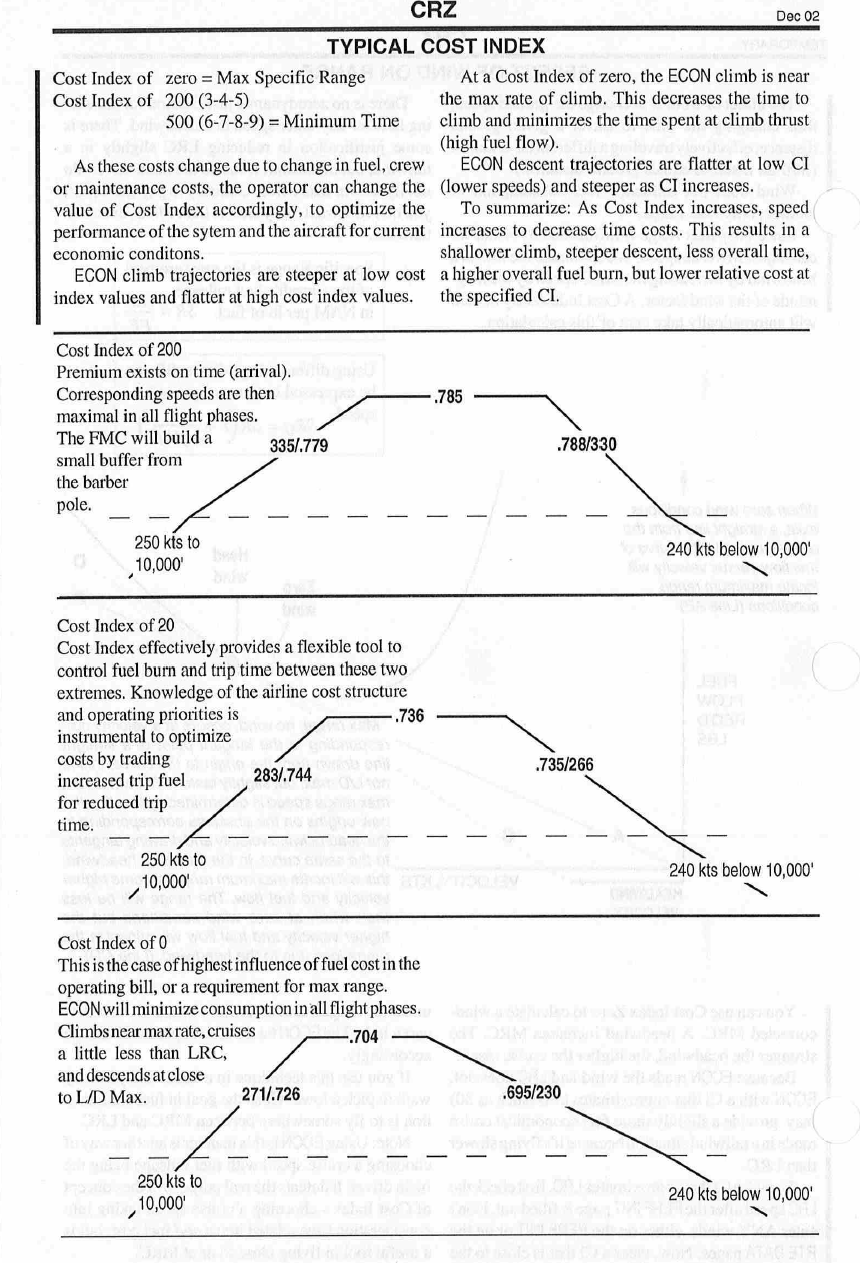
An advantage to climbing slower/getting up to cruise sooner is that you spend less time in the bumps. I never understood why some guys fly 320kts at 11,000ft right through cumulus. I CI = 0 until I'm at cruise.
 03-21-2026 | 10:07 AM
#12
Line Holder
Joined: Aug 2016
Posts: 371
Likes: 62
I think the theory is climb fast to get the advantage of the tailwind then fly slow to be in the tailwind longer. Let Mother Nature push you longer. Big headwind is climb into wind slower fly faster into headwind to be exposed to headwind for shorter time. Notice cost index is usually much higher when flying into strong headwind.
slow climb when you are in turbulence makes no sense to me. Climb faster to try to get out of it sooner.
slow climb when you are in turbulence makes no sense to me. Climb faster to try to get out of it sooner.
03-21-2026 | 10:53 AM
#13
Gets Weekends Off
Joined: Mar 2018
Posts: 3,729
Likes: 289
I think the theory is climb fast to get the advantage of the tailwind then fly slow to be in the tailwind longer. Let Mother Nature push you longer. Big headwind is climb into wind slower fly faster into headwind to be exposed to headwind for shorter time. Notice cost index is usually much higher when flying into strong headwind.
slow climb when you are in turbulence makes no sense to me. Climb faster to try to get out of it sooner.
slow climb when you are in turbulence makes no sense to me. Climb faster to try to get out of it sooner.
03-21-2026 | 01:08 PM
#14
Gets Weekends Off
Joined: Jul 2013
Posts: 5,293
Likes: 118
Sometimes, my morning coffee kicks in at an inconvenient time and I need to move some things around. Meaning, want to get to altitude quickly, but before the cabin starts to get busy and can set up.
03-21-2026 | 05:03 PM
#16
Gets Weekends Off
Joined: Mar 2014
Posts: 4,154
Likes: 341
 03-21-2026 | 07:45 PM
#17
Gets Weekends Off
Joined: Nov 2012
Posts: 3,765
Likes: 115
From: 1900D CA
With a strong headwind you want to fly a high airspeed to make the percentage of headwind component as small as possible.
With a big tailwind you want your air speed lower to have a larger relative effect of the tail wind.
Except if you have other priorities than saving fuel. I usually do
With a big tailwind you want your air speed lower to have a larger relative effect of the tail wind.
Except if you have other priorities than saving fuel. I usually do
03-21-2026 | 08:07 PM
#18
Gets Weekends Off
Joined: Mar 2011
Posts: 3,546
Likes: 332
From: 737 FO
This is true but would absolutely gum up the arrivals unless everyone is doing it, and I would bet that would happen in 0% of all cases due to arrival speed requirements. .70/230 kt descents aren't happening in any hub lol. Heck I don't know if I could stomach it into a spoke city either, that is just painful.
03-22-2026 | 03:03 AM
#19
At your mom's house
Joined: Jun 2008
Posts: 3,749
Likes: 503
From: cpt 737
Aerodynamics for Naval Aviators
Aerodynamics for Naval Aviators (2025): NAVWEPS 00-80T-80 (ASA FAA Handbook Series): U.S. Navy, Naval Air Systems Command, Hunt, Hugh Harrison: 9781619540170: Amazon.com: Books https://share.google/6Uw5pDtoHi12jW5Xj
Aerodynamics for Naval Aviators (2025): NAVWEPS 00-80T-80 (ASA FAA Handbook Series): U.S. Navy, Naval Air Systems Command, Hunt, Hugh Harrison: 9781619540170: Amazon.com: Books https://share.google/6Uw5pDtoHi12jW5Xj

Thread
Thread Starter
Forum
Replies
Last Post
ilikeplanes
Flight Schools and Training
10
11-14-2007 06:33 PM


