


Overall Job Outlook
 04-07-2008 | 07:09 PM
#61

Retired
Joined: Feb 2008
Posts: 3,527
Likes: 0
From: whale wrangler


 04-07-2008 | 08:31 PM
#62
Gets Weekends Off
Joined: Jul 2006
Posts: 146
Likes: 0

JAL, Cathay Pacific, Lufthansa and others have cadet style pilot programs. As a CFI in Anchorage on occasion I would try and check pilots out for rental who flew for those airlines. Most could not fly a small plane at all. One guy Could not even figure out how to land. All of them were a danger to the sky, But in the aircraft they were trained in and in an IFR environment I am sure that they were just fine.
One guy who flew for Lufthansa claimed that he only had 80 hours in a small plane.
SkyHigh
One guy who flew for Lufthansa claimed that he only had 80 hours in a small plane.
SkyHigh
Last edited by NZAV8R; 04-08-2008 at 11:44 AM. Reason: grammer
04-08-2008 | 12:44 AM
#63

Line Holder
Joined: Apr 2008
Posts: 282
Likes: 2
From: A320 FO
It's not taboo anymore. It's normal. Many of these 300 hour guys have a great head on their shoulders and worked very hard to get into an airline so quickly. Unfortunately, there are enough that are way too cocky and can't hold their own; those are the guys that make the rest look bad.
I was one of those 300 hour wonders over 2 years ago when I was hired. Training was a breeze because of an "RJ transition course" that I took, or whatever you want to call it, but it wasn't enough for the real world. It took an easy 3 months on the line before I was worth a crap as an FO. This was at a time when most regionals were looking for 1000/100 for new hires, so most were envious of how quickly I scored that "real flying job." Many of those who bash the 300 hour wonders would probably have grabbed the opportunity had it presented itself, although they won't admit it
I tell this story, however, because the 300 hour bashers are 100% correct in their skepticism. I would kill to go back in time and get 1000 hours CFIing, or flying night cargo ops somewhere in a baron. That experience is invaluable and I wish I had not missed out on it. But, like the majority of those in my shoes would have done, I caved into SJS and took that RJ job. Fortunately for my counterparts, they didn't get that opportunity. They were learning and gaining experience by leaps and bounds while I was holding tightly to the tailcone of a jet, acting as deadweight for a few months in the right seat.
While I hate to admit that I was one of those 300 hour no goods, I do so to caution the up and coming guys out there. Don't sell out early if you can help it!
I was one of those 300 hour wonders over 2 years ago when I was hired. Training was a breeze because of an "RJ transition course" that I took, or whatever you want to call it, but it wasn't enough for the real world. It took an easy 3 months on the line before I was worth a crap as an FO. This was at a time when most regionals were looking for 1000/100 for new hires, so most were envious of how quickly I scored that "real flying job." Many of those who bash the 300 hour wonders would probably have grabbed the opportunity had it presented itself, although they won't admit it
I tell this story, however, because the 300 hour bashers are 100% correct in their skepticism. I would kill to go back in time and get 1000 hours CFIing, or flying night cargo ops somewhere in a baron. That experience is invaluable and I wish I had not missed out on it. But, like the majority of those in my shoes would have done, I caved into SJS and took that RJ job. Fortunately for my counterparts, they didn't get that opportunity. They were learning and gaining experience by leaps and bounds while I was holding tightly to the tailcone of a jet, acting as deadweight for a few months in the right seat.
While I hate to admit that I was one of those 300 hour no goods, I do so to caution the up and coming guys out there. Don't sell out early if you can help it!
You would kill to go back in time and get 1,000 hours of CFI experience or go fly cargo at night? What's stopping you? Those jobs are still available and you don't have to "kill" for them. Loss of pay? What's that compared to the limitless amounts of [supposed] experience you will gain?
Flying an RJ is flying an RJ, flying a 152 closed traffic with a private student practicing his landings is just that as well. Two TOTALLY different things. All the landing practice in the world in a 152 won't help your RJ landings. The basics are the same for any aircraft, that's why their called basics. They are fundamental to flying. Aside from the basics I don't think much of the rest of it helps all that much.
Don't get me wrong, being a CFI is an honorable and worthwhile career. I applaud those that give back to this industry by shepherding the new, but don't go thinking that it really makes that much of a difference flying an RJ or 737 for that matter.
IMO what is most valuable is time in type. Wether it be simulating V1 cuts in a sim, or flying the line, that is the experience that really matters. I just fail to see the correlation between instructing in a Cessna and flying a 82,750 MRW jet.
By the way, hi everyone.
 04-08-2008 | 06:06 AM
#64

Self Employed.
Joined: May 2005
Posts: 7,120
Likes: 0
From: Corporate Pilot
Specialized Training
Ok so I agree that a guy out of Jet U with 300 hours is a scary concept... that is if your taking JetU to mean 0 to CRJ FO in 6 month programs. As a matter a fact if you go to www.jetuniversity.com and watch the 30 second spot they have posted before you get to their homepage I think it pretty much sums it up.
However, where my opinion will differ from most of yours, I am sure, is that someone who has gone to an Aviation University program such as (in alphabetical order as not to imply one is better than another): Auburn, Embry Riddle, FIT, Purdue, UND, etc. who have proven training programs is a whole different ball game. Most of these guys EARN their certs all the way through their CFII's and some of the schools have a Jet Sim course at the end of their training. Being that the schools are part 141 many of these students actually go through a number more intermediate check rides than a more traditional part 61 environment would, and even though more check rides does not equal a better pilot it would indicate that there is the ability to catch and correct training issues at an earlier stage. One important thing that many forget is that these schools teach full semester courses on Aerodynamics, Advanced Aerodynamics, Turbine Engines, Crew Resource Management, Navigation, Advanced Aviation Weather, Flight Physiology, human factors, etc., subject matters that are only briefly touched on in 121 ground school, but are a huge tool set in aviation. Also most of these guys will instruct at these schools for at least a year or so, and most of them, lately been leaving with somewhere between 400-800 hours to head for the regionals that will take them. My argument would be that these are much better pilots than the JetU Pilots we were referring to earlier and while they do get sim training for the CRJ (or the like) they do get a lot of the experience that someone that goes through part 61 training does and more. Oh, and I almost forgot they get a Bachelors too.
Would they be better pilots if they stayed for a few more years and didn't depart their respective schools for another year or two? Probably, but my point here is just because someone enrolls in a career oriented school doesn't automatically make them a bad pilot. And I would even go to the point to argue that I would rather have a grad from one of these schools with 400-800 hours under their belt sitting in the front of a CRJ i was catching a ride in than someone that came purely from a part 61 environment with 1500 hours.
However, where my opinion will differ from most of yours, I am sure, is that someone who has gone to an Aviation University program such as (in alphabetical order as not to imply one is better than another): Auburn, Embry Riddle, FIT, Purdue, UND, etc. who have proven training programs is a whole different ball game. Most of these guys EARN their certs all the way through their CFII's and some of the schools have a Jet Sim course at the end of their training. Being that the schools are part 141 many of these students actually go through a number more intermediate check rides than a more traditional part 61 environment would, and even though more check rides does not equal a better pilot it would indicate that there is the ability to catch and correct training issues at an earlier stage. One important thing that many forget is that these schools teach full semester courses on Aerodynamics, Advanced Aerodynamics, Turbine Engines, Crew Resource Management, Navigation, Advanced Aviation Weather, Flight Physiology, human factors, etc., subject matters that are only briefly touched on in 121 ground school, but are a huge tool set in aviation. Also most of these guys will instruct at these schools for at least a year or so, and most of them, lately been leaving with somewhere between 400-800 hours to head for the regionals that will take them. My argument would be that these are much better pilots than the JetU Pilots we were referring to earlier and while they do get sim training for the CRJ (or the like) they do get a lot of the experience that someone that goes through part 61 training does and more. Oh, and I almost forgot they get a Bachelors too.
Would they be better pilots if they stayed for a few more years and didn't depart their respective schools for another year or two? Probably, but my point here is just because someone enrolls in a career oriented school doesn't automatically make them a bad pilot. And I would even go to the point to argue that I would rather have a grad from one of these schools with 400-800 hours under their belt sitting in the front of a CRJ i was catching a ride in than someone that came purely from a part 61 environment with 1500 hours.
I think the MCL is on its way and that it will be a separate path taken by those who are exclusively interested in an airline career.
SKyHigh
04-08-2008 | 07:42 AM
#65

Line Holder
Joined: Sep 2007
Posts: 44
Likes: 0
From: 170 FO
A typical University graduate is trained for a career in aviation and not necessarily in the airlines exclusively. Specialized training could release the school from much of the traditional program and focus exclusively on part 121 subjects and procedures. The resulting product would have less flight time but a much more solid understanding of airline flying and would by custom ready for the job.
I think the MCL is on its way and that it will be a separate path taken by those who are exclusively interested in an airline career.
SKyHigh
I think the MCL is on its way and that it will be a separate path taken by those who are exclusively interested in an airline career.
SKyHigh
In that case we should start giving steroids to Little Leaguers to get them ready for MLB
04-08-2008 | 08:03 AM
#66
Gets Weekends Off
Joined: Apr 2007
Posts: 3,847
Likes: 10
It seems to me that the job description for a First Officer is to serve as apprentice to a captain. The FO is there to learn and build experience while under the eye of the more experienced pilot. The origional intent was not to have two captain qualified and experienced pilots up front.
If the FAA wanted 2000 hour FO's then they would have made the rules to reflect that. They must think that a 250 hour pilot who has passed the training required at that point is sufficient.
As such I can not see how spending years in the pattern doing touch and go's in a Cessna has any real value to an airline career over being an actual airline pilot. If you want to be an airline pilot then become an airline pilot if you want to teach then become an instructor. They are two totally different professions.
SkyHigh
If the FAA wanted 2000 hour FO's then they would have made the rules to reflect that. They must think that a 250 hour pilot who has passed the training required at that point is sufficient.
As such I can not see how spending years in the pattern doing touch and go's in a Cessna has any real value to an airline career over being an actual airline pilot. If you want to be an airline pilot then become an airline pilot if you want to teach then become an instructor. They are two totally different professions.
SkyHigh
04-08-2008 | 08:11 AM
#67
Gets Weekends Off
Joined: Apr 2008
Posts: 173
Likes: 0
04-08-2008 | 08:15 AM
#68
Gets Weekends Off
Joined: Apr 2008
Posts: 173
Likes: 0
577nitro-
04-08-2008 | 08:16 AM
#69
Line Holder
Joined: Dec 2007
Posts: 41
Likes: 0
From: Turboprop Captain
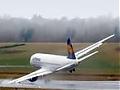
The foundation of her flying abilities was just setting then an A320 was placed on top. The structure looked fantastic... till... the foundation cracked badly.
The CA made a very poor choice of not attempting the much more favorable runway, let alone letting her attempt a x-wind landing at the A/C's limit, let alone failing to call for a go around earlier in the debacle.
Since she's low time and never been exposed to her limits (and never even been given a chance to explore them) she didn't even have enough experience to make the judgments that the CA should've. Since the CA failed, and the automation can't help; a very weak pilot, who never had time to truly master the basics, almost drove it into the ground.
Instructing and additional flying b/n being a student and becoming an FO would've created a much stronger flying foundation, thus avoiding a near disaster.
It's not only the poor execution of the technique that's scary, it's the lack of overall experience that lead to a decision to even attempt such a landing when it was completely avoidable in the first place.
BTW, they are hailed as being hero's over there. They posed for pictures and everything.
Last edited by BEEFF; 04-08-2008 at 08:57 AM.
04-08-2008 | 08:21 AM
#70

Day puke
Joined: Feb 2006
Posts: 3,865
Likes: 0
From: Out.
IFlying an RJ is flying an RJ, flying a 152 closed traffic with a private student practicing his landings is just that as well. Two TOTALLY different things. All the landing practice in the world in a 152 won't help your RJ landings. The basics are the same for any aircraft, that's why their called basics. They are fundamental to flying. Aside from the basics I don't think much of the rest of it helps all that much.
..... I just fail to see the correlation between instructing in a Cessna and flying a 82,750 MRW jet.
By the way, hi everyone.
..... I just fail to see the correlation between instructing in a Cessna and flying a 82,750 MRW jet.
By the way, hi everyone.
Gosh, i guess I have a lot to learn. I thought pitch + power = performance applied to all airplanes.... guess not.
Granted, flying a 152 won't teach one to fly coupled approaches, but the sight pictures are pretty darn similar (maybe you hadn't noticed). Case in point, circling approaches: since big planes fly faster, they have higher minima and larger protected areas (due to increased turning radius), but the sight picture is basically the same. On downwind the runway is near the wingtip or a couple inches below eye level, base turn is roughly at a 45 to the numbers or 10ish seconds beyond the thresh hold.
But, let's assume you are correct that 152 experience doesn't help with flying a big plane. Why then, do the foreign carriers with ab-initio programs even bother putting applicants in a piston single at all (or a single for that matter). Why not just put the applicants in a sim from day one with one, big commercial AMEL (or frozen atpl) check ride at the end?
Last edited by FlyJSH; 04-08-2008 at 08:27 AM. Reason: eye kant spel

Thread
Thread Starter
Forum
Replies
Last Post


